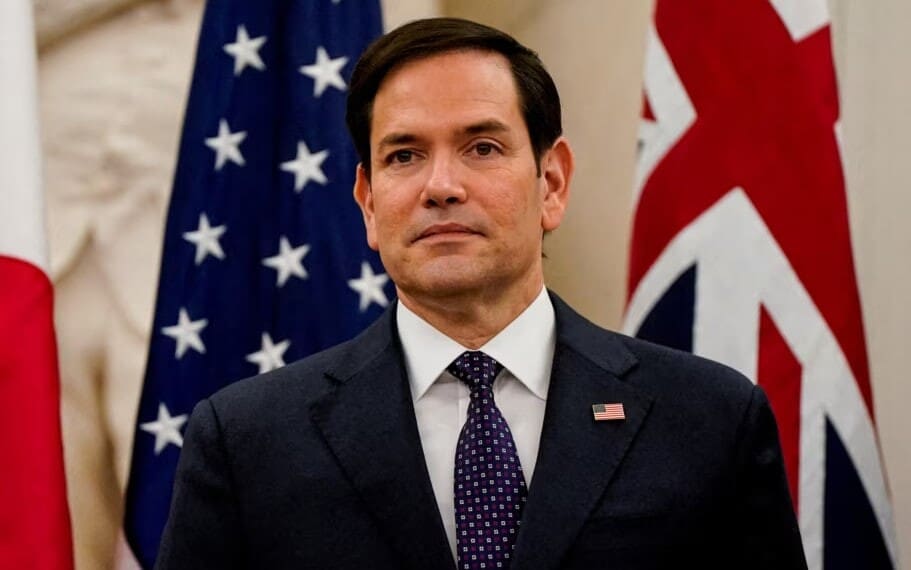
The U.S. Republican Party has never been ideologically monolithic, and this is the norm for a country with a high level of diversity in a two-party system. Within the main party of American conservatives, several influential groups coexist, with different views of America’s role in the world. One of the key places is occupied by the so-called “hawkish” wing of the Republicans, to which Secretary of State Marco Rubio belongs.
“Hawks in Trump’s team
The faction, which can be conditionally called neoconservative (the so-called “hawks”), unites politicians who support an active US foreign policy, Washington’s global leadership, and a tough stance against authoritarian regimes. Among the most famous representatives are Marco Rubio, Lindsey Graham, Mitch McConnell, Tom Cotton, and Mike Pompeo. This wing traditionally focuses on military and political alliances, primarily NATO, as well as on supporting US allies in conflict zones.
In the complex structure of the US Republican Party (GOP), Marco Rubio is traditionally considered one of the brightest representatives of the neoconservative wing. Although the party has been significantly transformed in recent years under the influence of Trumpism, Rubio has managed to become a link between traditional conservatives and supporters of the MAGA(Make America Great Again) movement.
Political views of Marco Rubio
Marco Rubio has long been a part of the Republican Party’s “establishment”. His image has been cemented as the party’s expert on foreign policy and national security. Since 2025, as US Secretary of State in the second administration of Donald Trump, he has combined the classic Republican approach of “peace through strength” with a new course of prioritizing American national interests.
Marco Rubio’s views are characterized by a combination of social conservatism and aggressive foreign policy:
- Maintaining and strengthening the US military presence in the world. Rubio is one of the harshest critics of China, calling it the “greatest threat” to the United States. He also actively advocated regime change in Venezuela, and now he is also in favor of changing the communist regime in Cuba – his parents are Cuban exiles Mario Rubio and Oria Garcia. He supports sanctions and pressure on the authoritarian leaders of Russia and Iran (in particular, the recent operations to remove Nicolas Maduro in early 2026).
- Economy: Rubio supports lowering taxes for corporations, reducing government regulation, and balancing the federal budget while increasing defense spending.
- Social issues: He identifies himself as a supporter of the pro-life movement (against abortion), supports the repeal of the Affordable Care Act (Obamacare), and is in favor of strengthening border security.
Attitudes towards Ukraine
Supporting Ukraine as an element of deterring Russia and protecting the international order. But his position on Russia’s war against Ukraine has evolved. After the annexation of Crimea, Rubio emerged as one of the most ardent defenders of Ukrainian sovereignty. He insisted that the U.S. has an obligation to provide effective assistance to the Ukrainian people and the interim government to protect the country’s territorial integrity.
At the beginning of the great war, the senator maintained a tough pro-Ukrainian line. In 2014, Rubio emphasized the need to preserve legitimate Ukrainian statehood under any circumstances, assuring that the United States would support Ukrainians as long as they had the will to resist – even if the struggle turned into a prolonged uprising. After the full-scale invasion, Rubio’s position shifted toward skepticism about continued funding for the war effort. He began to argue that indefinite aid would only preserve the “stalemate” at the front. One of his most resonant and critical remarks was the thesis that the US resources are not unlimited, and the country’s human potential is running out, summarizing: “Ukraine is running out of Ukrainians”. Recognizing Russia as the aggressor, as of 2025-2026, he emphasizes the need to end the war through negotiations, noting that the conflict has reached a “deadlock” and both sides must make certain concessions to cease fire. He voted against providing critical assistance to Ukraine on April 24, 2024, as most Trumpists did at the time.
Marco Rubio today is a symbol of the adaptation of traditional Republican conservatism to the realities of modern America. He has ceased to be just an “alternative” to Trump (as in 2016) and has become a significant player in US foreign policy. The Senate unanimously confirmed Rubio as Secretary of State, the first Latino to hold this position.
His group in the party is trying to balance isolationism (the US desire to withdraw from world affairs) with the need to maintain its superpower status. For Ukraine and Europe, Rubio’s figure means predictability in security matters, but also a pragmatic approach where American interests and resources will be prioritized.
Marco Rubio is one of the most consistent critics of isolationism within the Republican Party, considering the US abandonment of its global role a direct threat to American national interests. Unlike the MAGA wing, Rubio emphasizes that “America First” does not mean “America aside.”
Ideological conflict within the party
Rubio’s group is in discussion with the Republican camp, which is gravitating toward Donald Trump and his supporters. While MAGA emphasizes domestic issues, minimizing external obligations, and pragmatic agreements even with autocracies, neoconservatives insist on a values-based approach, deterring aggressors, and protecting allies. This conflict defines the modern Republican Party and greatly influences the US position on Russia’s war against Ukraine, the role of NATO, and confrontation with China.
The faction to which Marco Rubio belongs represents the “old school” of American conservatism, adapted to new global challenges. It is based on the belief that US weakness provokes aggression, and that the rejection of leadership destroys the international security system.
Despite the growing influence of the isolationists, this group remains the key to Ukraine in the Republican Party and a factor that restrains the radical turn of the United States toward a policy of self-removal from global processes.