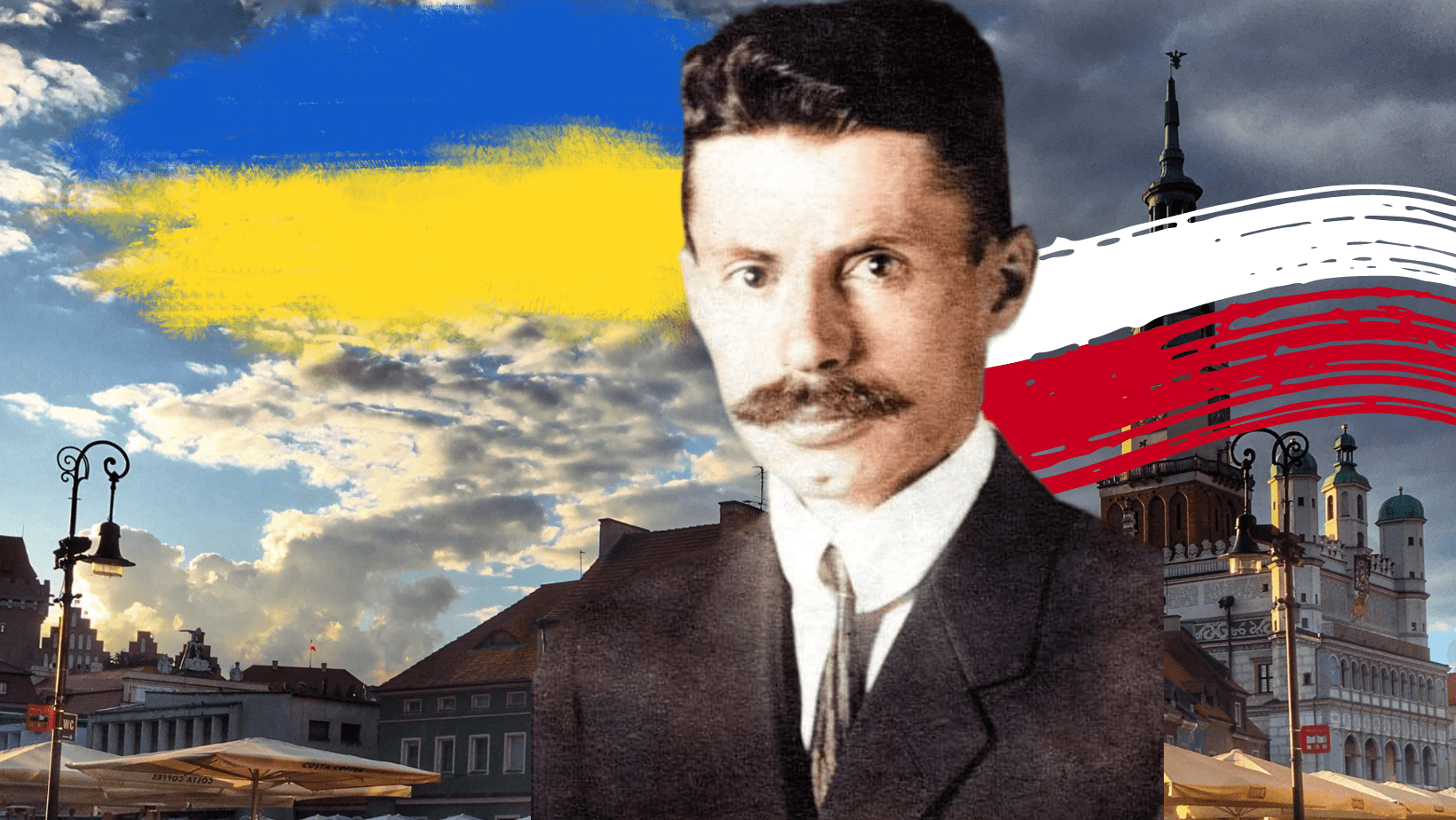
Is it possible to renounce one’s name, family, and traditions for the sake of the idea of a nation that does not even have its own state yet? At the beginning of the twentieth century, a Polish nobleman made just such a choice. Viacheslav Lipinski did not simply cross over to the other side of history. He rewrote the very logic of national identity in Eastern Europe.
A nobleman from Volyn who did not look at Warsaw
The Polish nobleman consciously became a Ukrainian, a personal choice of Viacheslav Lypynskyi that broke the existing national stereotypes. Viacheslav Lypynskyi was born in 1882 in the Volyn village of Zaturtsi into a family of Polish gentry who had lived on Ukrainian lands for several centuries. By origin, family language, and social status, he belonged to the Polish world. He was a typical kresowiak, as they used to say, a Pole from the Ukrainian borderland.
But his life shaped his worldview not in salons or in family legends, but alongside Ukrainian peasants and Ukrainian students. It was they, not books or university lectures, who became the first and strongest source of his Ukrainianness. Lypynsky saw Ukraine not as a territory or “eastern crosses,” but as a living community with its own history and the right to a future.
As a high school student, Lipinski openly called himself a Ukrainian. For the Polish gentry, this sounded almost like a betrayal. The final break occurred not only at the level of ideas but also of symbols. When his mother addressed him by the Polish name Wacław, he replied sharply but firmly that from now on he was Viacheslav and a Ukrainian.
Lipinski moves from personal choice to political action. He launched a public campaign addressed to the Polish nobility of the Right Bank. Its essence was radical even by the standards of the time. The gentry should recognize their historical mistakes and help Ukrainians create their own state as moral compensation for the past.
Books that were destroyed but read
In 1909, the book “The Nobility in Ukraine” was published in Krakow, causing a real scandal. Polish nationalists bought it to destroy it. Polish newspapers accused the author of treason and even of working for Prussia!
Subsequent works only strengthened the effect. Lipinski argued that the Polish gentry was not only an oppressor but also a part of Ukrainian history. He broke the black-and-white picture of the past and offered a difficult but honest conversation about responsibility and a common future.
It is no coincidence that contemporaries wrote that yesterday’s Poles, after reading Lipinski, began to realize themselves as Ukrainians.
Studying in Krakow and Geneva only broadened his horizons. He became part of the circle of Ukrainian intellectuals, collaborated with the Rada newspaper, became closer to Borys Hrinchenko, and worked with Galician conservatives. It was during this period that Lypynsky moved from the question of “who we are” to the question of “what the state should be like.” He advocated an independence program, warned against socialism, worked in the Ukrainian Information Committee, and later joined the creation of the Union for the Liberation of Ukraine. For him, Ukrainian independence was not a romance but a rational political project.
Ukrainian by conviction, not by blood
In 1917, Lypynsky organized the Poltava Ukrainian military community, became a member of the leadership of the Khleboborobska Party, and after the defeat of the liberation struggle, he did not give up. In exile, he created the Hetman movement, developed the concept of Ukrainian monarchism, and prepared for a new historical chance that he believed Europe would give Ukraine.
The paradox of Ukrainian history was fully manifested here. The most consistent conservative statesman was not an ethnic Ukrainian, but a Polish nobleman who consciously and irrevocably chose Ukraine.
The story of Viacheslav Lypynsky shows that Ukrainianness was never just a matter of origin or language. It was a choice of responsibility. He gave up a comfortable identity, status, and family world for the sake of a state that did not yet exist. That is why Lypynsky remains an uncomfortable, complex, and at the same time extremely relevant example of how nations are created not only by iron and blood, but also by personal decisions.
Author: Valeriy Maydanyuk