Консервативна Платформа
  • News
    • Analytics
    • Worldview
    • Anti-imperial front
    • Weapons
    • Geopolitics
  • publication
  • Position.
  • Events.
Friday, August 28, 2026
  • English
    • Ukrainian
Консервативна Платформа
  • News
    • Analytics
    • Worldview
    • Anti-imperial front
    • Weapons
    • Geopolitics
  • publication
  • Position.
  • Events.
Консервативна Платформа
  • News
    • Analytics
    • Worldview
    • Anti-imperial front
    • Weapons
    • Geopolitics
  • publication
  • Position.
  • Events.
Copyright 2021 - All Right Reserved
in Russia

The Russian air defense base on Mount Ai-Petri is damaged as a result of a morning missile attack on Crimea.

від Савицький Олексій May 13, 2024

Russian air defense base on Mount Ai-Petri was damaged in a morning missile attack on Crimea. The commander of the military unit was killed – media

Today, on May 13, at around 6 a.m., several missiles (presumably Storm Shadow) attacked the military unit 85683 on Mount Ai-Petri in Crimea, sources in the emergency services of the annexed region told the media. The mountain is home to a “secret” air defense base of the 3rd Radio Technical Regiment of the Russian Armed Forces.

The territory of the military unit was damaged as a result of the missile strike, and the commander of the 85683 military unit Oleksandr Kulakov and another soldier were killed. There are also wounded, their number is being clarified.

The 3rd Radio Engineering Regiment is a military formation within the radio engineering troops of the Russian Aerospace Forces. It was formed in 2014 after the annexation of Crimea by the Russian Federation on the basis of the 40th Radio Engineering Brigade of the Air Force of Ukraine. The headquarters is located in Sevastopol.

In the Soviet years, the Radio Technical Center for Long-Range Reconnaissance and Guidance of Air Defense Forces was established on the top of Mount Ai-Petri. The domes of the radar’s protective structures like bullets often attracted the attention of tourists. Radar complexes are hidden under these domes.

May 13, 2024
FacebookTwitterLinkedinWhatsappTelegramViberEmail
Internal front

Russian GRU group, planning a series of terrorist attacks in Kyiv by May 9, detained

від Савицький Олексій May 13, 2024

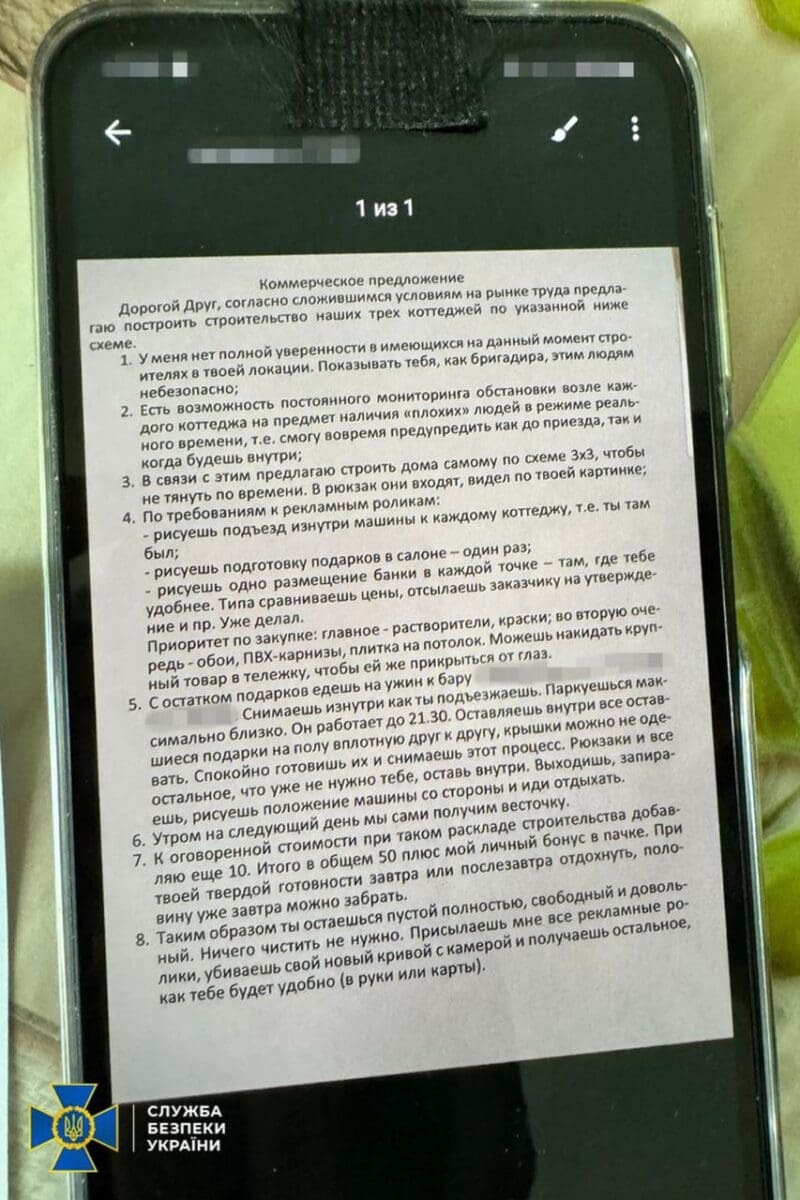
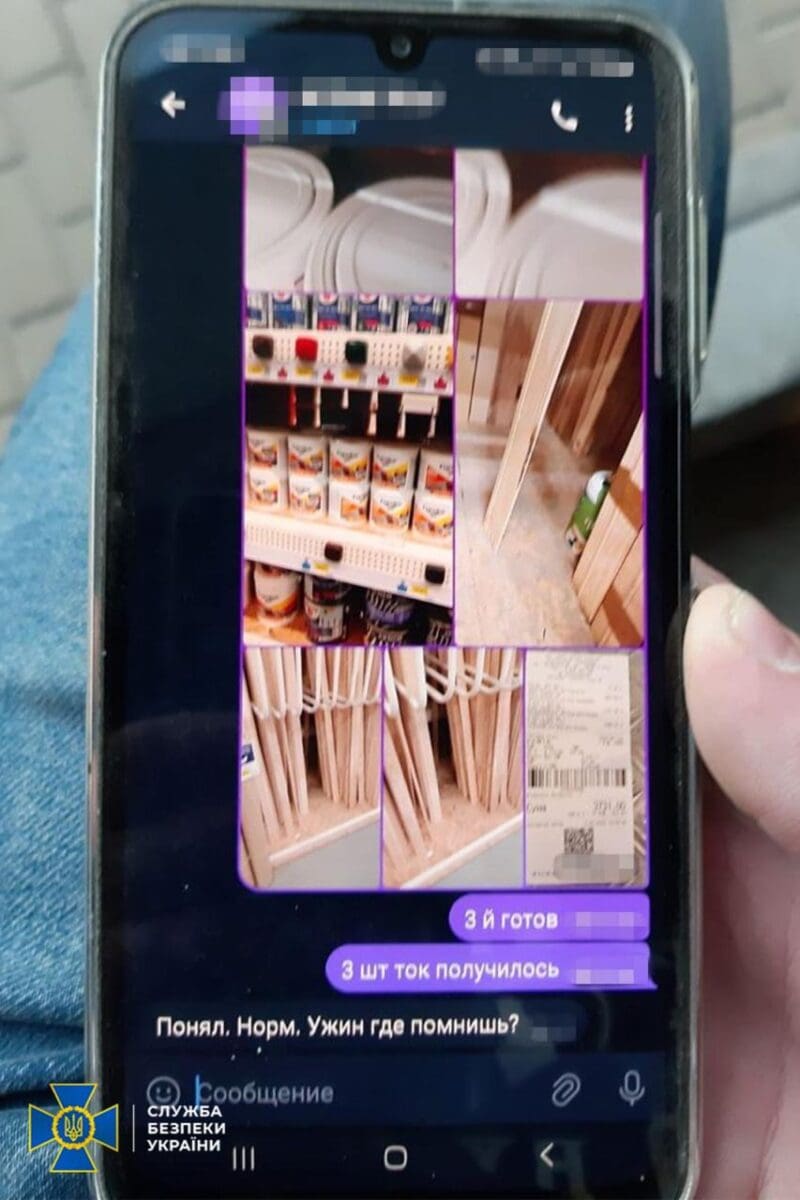
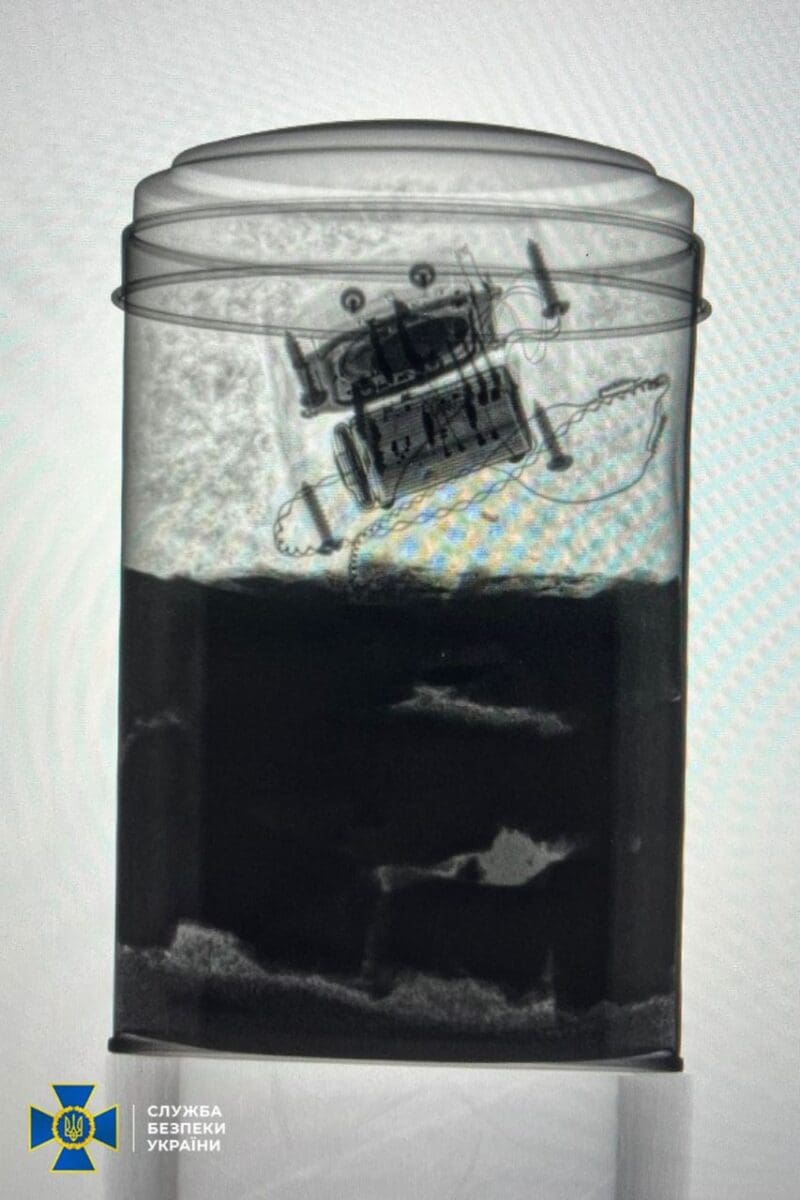
The SBU CI prevented four terrorist attacks in Kyiv that were to take place on May 9. As a result of a multi-stage special operation, SBU detained Russian agents who were installing explosive devices in construction hypermarkets of a well-known chain and near a cafe.

According to the available data, the improvised explosive devices were disguised in tea bags. They consisted of a timer, a detonator, and plastic explosives with an incendiary mixture that was intended to cause large-scale fires.

According to the Russian secret service’s plan, the explosives were to detonate during peak hours of hypermarket traffic to cause maximum damage to civilians. In addition, it was planned to be placed among flammable materials so that such a fire could not be quickly extinguished.

Another terrorist attack was to take place near a popular Kyiv cafe. Russian agents wanted to plant explosive devices in a car parked nearby.

The SBU CI established that the curator of the Russian terrorist attacks was a member of the GRU, Yuriy Syzov, who serves in the military unit No. 92154.

He personally gave instructions to the recruited agents and even recorded a video instruction on how to install an explosive device in one of the stores of the same chain in Moscow region.

The SBU had been monitoring his activities for a long time and documented the criminal actions of the agents step by step.

In particular, Yuriy Syzov was also responsible for a sabotage in Ukraine that was to take place in Lviv region in February 2024. At that time, the SBU was also proactive and prevented the explosions.

The SBU has now identified the entire chain of this network, including the agent and combat teams, smugglers who delivered explosives from Russia, as well as the direct perpetrators of the terrorist attack: they were detained red-handed while they were installing explosive devices in the third hypermarket.

Currently, the detainees have been notified of suspicion in connection with their crimes, in particular under the following articles of the Criminal Code of Ukraine:
▪️ Art. 111 (high treason);
▪️ Art. 113 (sabotage);
▪️ Art. 258 (terrorist act).

They face life imprisonment.

May 13, 2024
FacebookTwitterLinkedinWhatsappTelegramViberEmail
Events.

Round table “The importance of the conservative idea in modern Ukraine”

від Юрій Гончаренко May 12, 2024

We invite you to take part in the roundtable discussion “The Importance of the Conservative Idea in Modern Ukraine”.

During the event, we will discuss:

  • the importance of the conservative idea in modern Ukraine;
  • forms and methods of influence on right-wing conservative environments and movements in Europe and the United States in the context of electoral processes and assistance to Ukraine;
  • countering Russian propaganda narratives on the ideological front;
  • the possibility and principles of cooperation between related conservative environments in Ukraine;
  • motivation for young people to participate in the development and dissemination of conservative ideas in Ukraine.

Among the participants:
– Yuriy Pidlisnyi, Head of the Ethics-Politics-Economics Program at the Ukrainian Catholic University;
– Valeriy Maidaniuk, PhD in Political Science, expert at the NGO Democracy Support Foundation.
– Maksym Koliba, Deputy Dean for Academic Affairs at the Faculty of Social Sciences of the Ukrainian Catholic University, Senior Lecturer at the UCU School of Law.
– Yuriy Honcharenko, Vice President of the NGO Democracy Support Foundation.

Moderator:Valentyn Balahura, political scientist, Velikaya Derzhava NGO.

The event will take place on May 13, 2024 at 16:00 in Lviv. The exact venue (close to the center of Lviv) will be announced after registration for security reasons.

Participation is subject to pre-registration via the link (or the QR code in the picture): https://forms.office.com/r/ec2T3qxEGs

The project is implemented by theNGO Democracy SupportFoundation with the support of Hanns Seidel Stiftung Ukraine.

May 12, 2024
FacebookTwitterLinkedinWhatsappTelegramViberEmail
Analytics

Have Christian Democrats lost their Christian foundation?

від Майданюк Валерій May 12, 2024

Polish professor, historian, and political scientist Pawel Skibinski gave a resonant interview titled “Ideological Revival of Christian Democrats Is Impossible,” in which he condemned the partial loss of Christianity by the Christian Democratic parties in Europe.

The author harshly states that Christian democracy in the West has adopted the values of the left and we are witnessing the abdication of its own identity as a political movement of believers. By the way, Skibinsky is not the only one who sharply speaks out about the decreasing share of Christianity in the political platforms of European Christian democratic parties, and some even begin to notice the need to replace the word “Christian” in the name of this ideology.

The Polish professor notes that as a result of powerful political trends and the Marxist left in European politics, Christian democracy did not escape this influence. Another reason was the cooperation of Christian democrats with left-wing parties, which took place, in particular, in France, where the so-called Catholic Left operated and the ideas of Mounier’s Catholic socialism emerged.
Other examples are the large SPD-CSU coalition in Germany, led by Chancellor Kurt Georg Kiesinger, and the unrealized idea of a historic compromise and coalition of the Italian Christian Democrats with the Communist Party. Skibinsky notes the powerful penetration of Marxism in the Catholic Church in the field of philosophy and theology, and the only support for anti-communist and Christian thinking for decades was the CSU, the Bavarian Union Party of the CDU.

Answering the question “how did this happen and why did Christian democracy become less Christian?” the Polish professor notes that this is mainly due to the fact that after the Second Vatican Council, Christian democrats began to take into account the leftist tendencies existing in society and in the Vatican itself. “Western societies after 1968 were formed in a leftist style, so Christian democracy moved to the left. Christian democrats became too weak and too tied to situational political gain. They did not want to look at political reality in the long run. Therefore, they continued to give in to the leftist agenda and have been openly implementing it for many years,” the professor notes. He cites the abortion controversy and the consent of Catholic politicians to the existence of a system that legalizes abortion as an example.
“When Christian democracy decided to regain the dominant position on the left wing agenda, it turned out that it was not stable enough to do so,” the professor states.

Indeed, many Christian parties have to compromise on the issue of adapting Christian values to the values popular in the West, which were directly criticized in the Bible. At the same time, CD parties have to compete in elections for the votes of Western voters accustomed to liberal slogans, especially young people. It is difficult to be a moral guide when moral adaptation is in vogue.

According to Professor Skibinsky, “the ideological revival of the current Christian democratic parties is rather impossible. This is due to too deep a financial dependence, political and ideological habits, and a certain political sclerosis characteristic of the whole of Europe. But we should draw conclusions from the historical decline of Christian democrats. We should look to Christianity for inspiration for another political revival. For each generation must find its own way of realizing social Catholicism.”

Researchers of Christian democracy Edward Lynch and Scott Mainwaring note that the main reasons for the electoral defeats of Christian democrats are the growing conformism and pragmatism in their political practice. In particular, as Edward Lynch noted, “Christian Democrats have not succeeded in utilizing their potential because they have retreated from their own ideological principles. And Scott Mainwaring notes: “Democratic Christian parties have become less idealistic and consistent in their programmatic attitudes in order to become more pragmatic in order to broaden their supporters.” However, this inevitably led to the loss of the nuclear electorate, for whom Christian values and morality were not an empty sound. In the twenty-first century, the political practice of Christian democratic parties is characterized by much more conformism and political pragmatism and much less religious values.

As the experience of European and Latin American Christian democracies shows, Christian democratic parties succeed when they consistently follow their own principles and programmatic foundations based on Christian values and the ethics of the Gospel. When Christian democrats waged an uncompromising fight against corruption, the mafia, monopoly, and successfully solved socio-economic problems, their rating was high.

The Christian Social Union, which has been in power in Bavaria for more than half a century, is an example of the most successful and longest-lasting Christian democratic project. The CSU effectively ensures the economic and social development of citizens and makes a significant contribution to the revival of the European Christian democratic movement. Today, it is one of the most successful examples in the world of implementing the theory of the international Christian democratic movement, because for more than 50 years, the residents of democratic Bavaria have never doubted the effectiveness of the Christian Social Union representatives, supporting them in every election.

Author: Valeriy Maydanyuk

May 12, 2024
FacebookTwitterLinkedinWhatsappTelegramViberEmail
News

Magura V5 GW and Drones Caused $500 Million in Damage to the Russian Black Sea Fleet

від Савицький Олексій May 10, 2024

Magura V5 maritime drones have preliminarily caused $500 million in losses to the Russian Black Sea Fleet, – representative of the GUR Yusov

A representative of the Defence Intelligence of Ukraine said that today a naval drone in the hands of DIU operators is a formidable weapon and probably the most effective fighter of the aggressor’s Black Sea Fleet during the full-scale invasion.

He added that the process of improving Magura is ongoing and after each successful operation, the actions of both scouts and the enemy are analyzed.

“As of today, the aggressor’s Black Sea Fleet has already suffered more than $500 million in losses as a result of effective actions of the GUR special forces using Magura drones,” Yusov said.

May 10, 2024
FacebookTwitterLinkedinWhatsappTelegramViberEmail
Events

Ukrainian drone strikes on Russian refineries replace Western sanctions: Ukraine should continue strikes on Russian refineries – media

від Савицький Олексій May 8, 2024

Ukrainian strikes on Russian oil refineries are now doing what the Western sanctions regime failed to achieve. One of the world’s largest oil producers is now importing gasoline – Foreign Affairs.

Since October, Ukraine has carried out at least 20 strikes on Russian refineries. Ukrainian security officials said that the attacks were aimed at cutting off fuel supplies to the Russian military and reducing export revenues that the Kremlin uses to finance its military operations.

By the end of March, Ukraine had destroyed about 14% of Russia’s refining capacity and forced the Russian government to impose a six-month ban on gasoline exports.

However, President Joe Biden’s administration has criticized the attacks. In February, Vice President Kamala Harris called on Ukrainian President Volodymyr Zelenskyy to refrain from attacking Russian oil refineries, fearing that these strikes would lead to an increase in world oil prices.

In mid-April, Defense Secretary Lloyd Austin warned the Senate Armed Services Committee that “the attacks could have a knock-on effect in terms of the global energy situation.”

However, Washington’s criticism is misplaced, the newspaper writes: the refinery attacks will not affect global energy markets, as US officials fear. These strikes reduce Russia’s ability to turn its oil into petroleum products; they do not affect the amount of oil the country can produce or export. In fact, with less domestic refining capacity, Russia will be forced to export more of its crude oil, not less, leading to lower, not higher, world prices.

If Russia decides to shut down wells instead of increasing exports, the global oil price will indeed rise, an outcome the Biden administration is seeking to avoid. But then Russia would face an even sharper increase in the cost of refined products, with only lower export revenues to soften the blow. It was therefore not surprising when, in March, Russian First Deputy Energy Minister Pavel Sorokin suggested that Moscow would choose the first option and redirect more crude oil for export.

Indeed, Russian companies have started selling more crude oil to foreign countries. As long as they are limited to Russian refineries, the attacks are unlikely to lead to higher oil prices for Western consumers.

However, they could still hurt in Russia, where prices for petroleum products such as gasoline and diesel have begun to rise. The strikes achieve the same goals that Ukraine’s Western partners have set out to achieve but have largely failed to do so because of sanctions and price caps on Russian oil: weakening Russia’s financial and logistical ability to wage war while limiting broader damage to the global economy.

“Kyiv should win wherever possible, and the campaign to destroy Russian refining capacity brings Ukraine benefits with limited risk,” the article says.

So far, Ukraine has focused its attacks on Russian refineries, not on oil fields or crude oil export infrastructure. This distinction is important. After oil is extracted from a well, it is transported through pipelines and other infrastructure to refineries, where it is transformed into products for distribution to end users.

In 2023, Russia will produce about 10.1 million barrels of oil per day. Of this, about 50% was exported to refineries abroad, and the remaining 50% was refined domestically to create products such as gasoline, diesel, jet fuel, and chemical raw materials. Half of these refined products were consumed domestically, and a significant portion was used to fuel the Russian war machine.

The Ukrainian strikes have dealt a significant blow to Russia’s refining capacity – up to 900,000 barrels per day. Repairs will be slow and expensive, partly because refineries, where oil is distilled into its components, are huge and complex pieces of equipment that take years to design and build, and partly because Western sanctions have made access difficult for Russian firms.

Data from recent months confirm that, as expected, Russia is exporting more crude oil, while its refined fuel exports have reached near historic lows. During the last week of April, Moscow exported just over 712 thousand tons of diesel fuel and gas oil, which is less than the more than 844 thousand tons during the same week in 2023.

The strikes did not affect international crude oil prices, which remained stable until the end of March.

May 8, 2024
FacebookTwitterLinkedinWhatsappTelegramViberEmail
Internal front

He was pointing missiles at Kryvyi Rih: SBU detains suspect

від Савицький Олексій May 8, 2024

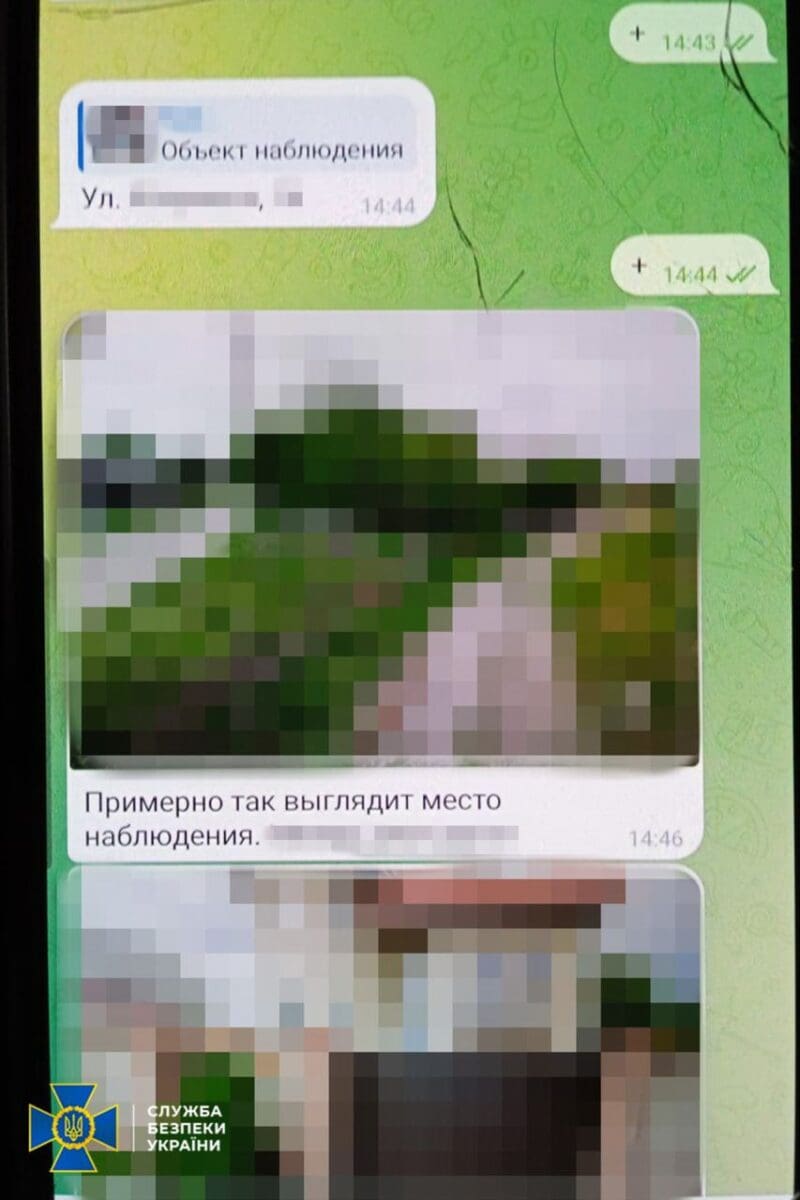
According to the investigation, the defendant, a 27-year-old local resident, was interested in the combat positions of Ukrainian air defense defending the city and surrounding areas of Dnipropetrovs’k region.

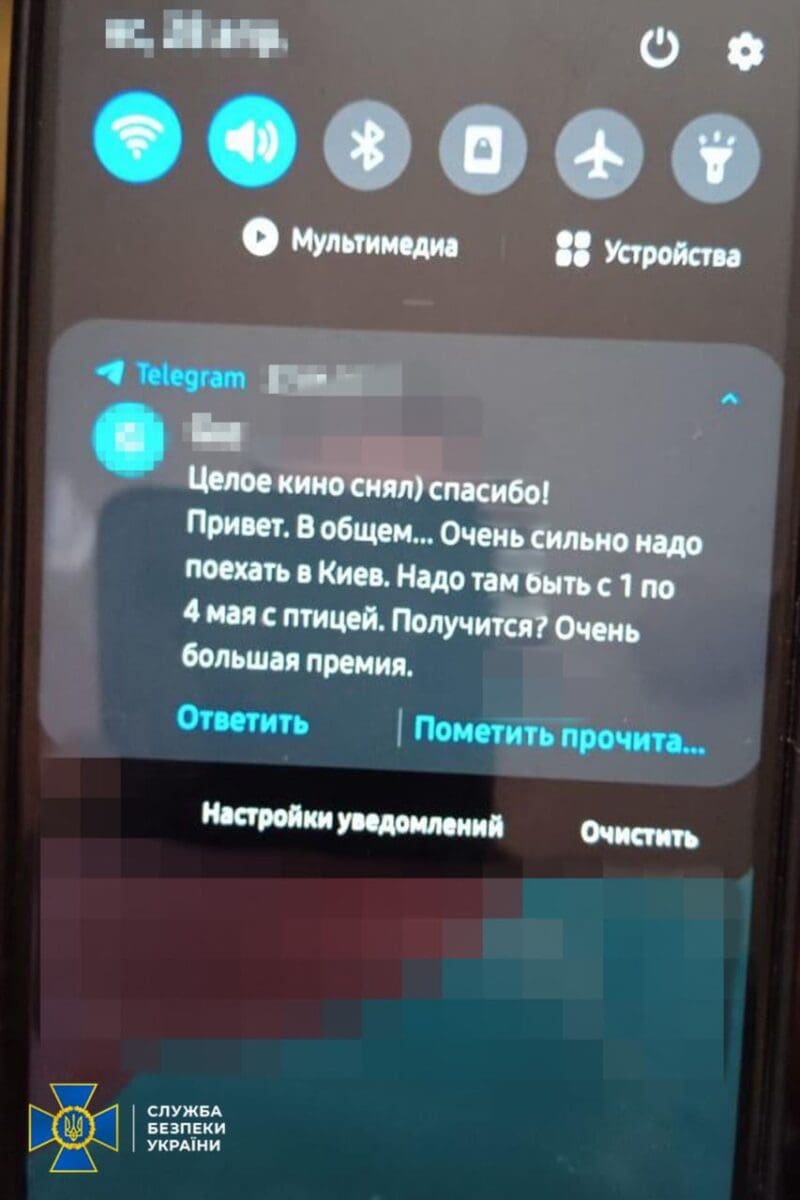
His actions were coordinated by a Kremlin “military officer” who is a member of Putin’s media pool and cooperates with Russian intelligence. On his instructions, the informant traveled around the area and tried to identify the locations of radar stations and air defense systems.

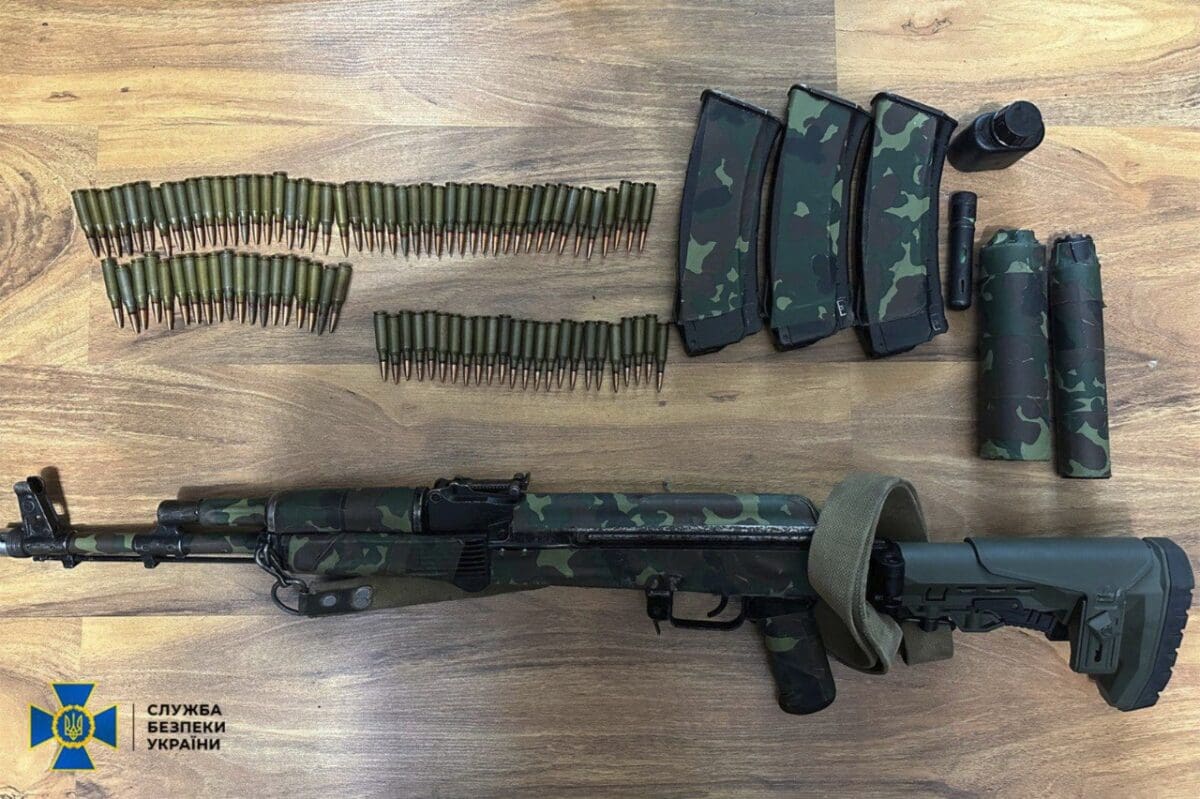
During the searches, the SBU found an AK-74 assault rifle with silencers and ammunition.

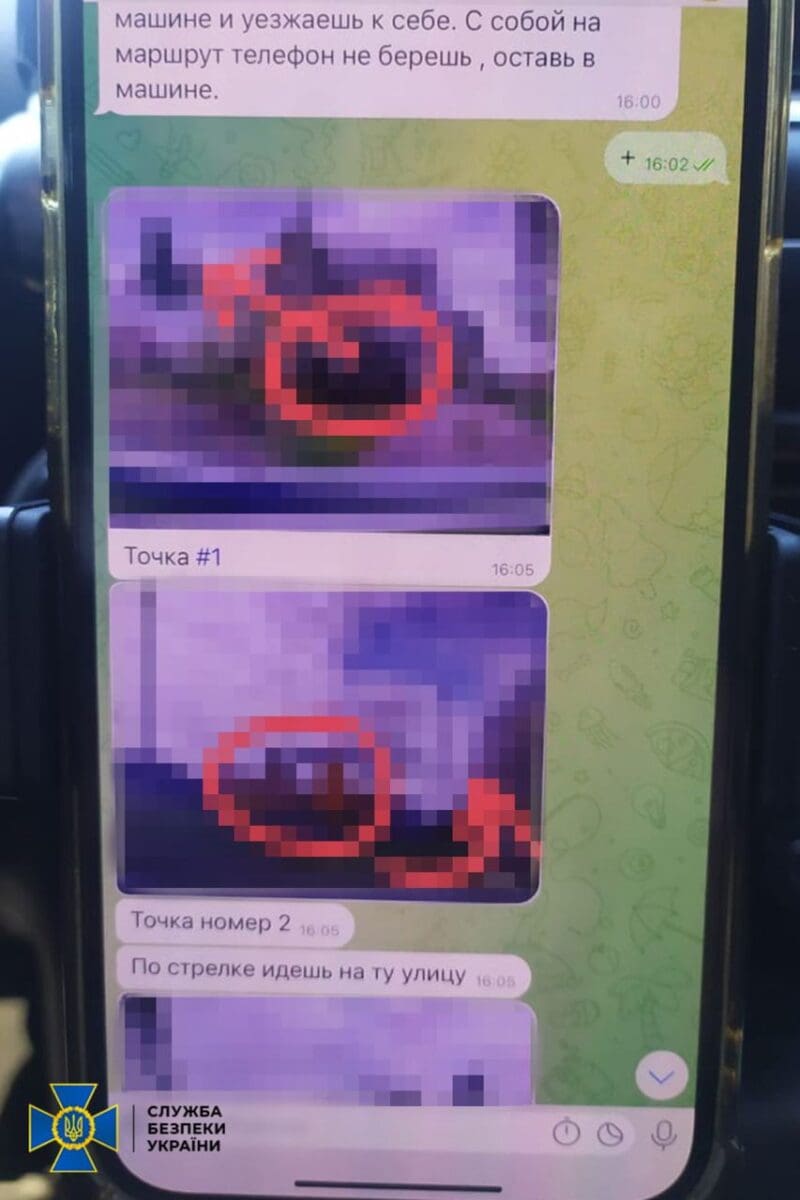
The suspect also marked on maps the geolocation of Ukrainian checkpoints and military equipment depots, planning to send the data to the occupiers via messenger. The suspect was detained during reconnaissance of the area. He faces up to 12 years in prison.

SBU investigators have served the detainee a notice of suspicion under Part 3 of Art. 114-2 of the Criminal Code of Ukraine (unauthorized dissemination of information on the sending, movement of weapons, armaments and ammunition to Ukraine, movement, relocation or deployment of the Armed Forces of Ukraine).

The issue of additional qualification of the criminal actions under Art. 263 of the Criminal Code of Ukraine is also being decided.

May 8, 2024
FacebookTwitterLinkedinWhatsappTelegramViberEmail
in Russia

From the end of December to February, the Russian Armed Forces launched 50 North Korean KN-23 missiles into Ukraine: Half of the missiles fired at Ukraine from the DPRK exploded in the air

від Савицький Олексій May 8, 2024

Almost half of the North Korean missiles fired by the Russian occupiers at Ukrainian cities did not reach their target. This was reported by the Office of the Prosecutor General of Ukraine in response to a request from Reuters.

The last use was recorded on February 27. At least half of the missiles went off trajectory or malfunctioned, indicating poor build quality and the use of cheap components in the missiles themselves.

These results raise doubts about the quality of North Korea’s precision weapons, as the KN-23 is one of the newest systems that was put into service in 2019.

The use of North Korean weapons on the territory of Ukraine killed 24 people, injured 115 others, and damaged residential and industrial facilities.

The Office of the Prosecutor General noted that approximately 50 missiles were launched from the western regions of Russia, including Belgorod, Voronezh, and Kursk regions. At the same time, an investigation is underway to establish the possible presence of Pyongyang instructors at the launch sites.

As you know, Russia has begun direct oil supplies to North Korea despite the UN sanctions to which it is a signatory. In exchange for oil, the aggressor country receives weapons, the Financial Times reported.

The British think tank Royal United Services Institute for Defense Studies (RUSI) has released satellite images showing the arrival of at least five DPRK tankers at the Eastern Port in Russia. The ships arrived at the port, located in the Russian Far East, to hold oil.

Deliveries from Russia began on March 7, 2024. These are the first documented direct deliveries from Russia to the DPRK since 2017. It should be noted that the UN Security Council, with Russia’s consent, imposed sanctions on North Korea that restricted oil transportation in response to the DPRK’s nuclear test at the time.

May 8, 2024
FacebookTwitterLinkedinWhatsappTelegramViberEmail
Internal front

Zelensky’s assassination was being prepared: SBU detains two colonels of the State Protection Department

від Савицький Олексій May 7, 2024

The SBU exposed a network of Russian agents who were preparing to assassinate the President of Ukraine. The group included two colonels of the State Protection Department, who were detained.

The SBU conducted a unique special operation to expose a network of agents of the 5th Service of the Russian Federal Security Service, which was preparing the assassination of the President of Ukraine and top law enforcement officials. The network included two colonels of the State Protection Department.

The network also plans to eliminate SBU Head Malyuk and other security officials, including the head of the Main Intelligence Directorate, Budanov. The SBU was proactive.

The enemy’s plan was as follows: first, the recruited agent was to observe the movement of the protected person and transmit information to the enemy. The coordinates of the house where the official was supposed to be were to be used to launch a missile strike. Then they were going to attack the people who remained at the site of the attack with a drone. After that, the Russians planned to hit with another missile, including to destroy the traces of the drone.

The agent was provided with weapons by a colonel of the UDO, who personally brought FPV drones, RPG-7 charges, and MON-90 anti-personnel mines to Kyiv. The SBU recorded both the colonel’s trips to another region of Ukraine to get drones and explosives, and conversations between the potential terrorist attacker and his FSB “supervisor.”

The SBU special operation proved that the FSB is a terrorist organization. After all, the liquidation of the Ukrainian leadership was planned by officers of the 9th Directorate of the Operational Information Department of the 5th Service. All of them have been identified. They are Maxim Mishustin, Dmitry Perlin and Alexei Kornev.

In particular, in January 2022, Perlin became the curator of the “moles” who were recruited before Russia’s full-scale invasion. Until then, they had been “supervised” by his colleague Alexei Kornev.

For example, before the outbreak of the full-scale war, Kornev held a series of secret meetings with the colonel of the UDO in neighboring European countries. Funds for agents were also usually transferred abroad.

Currently, they have been notified of suspicion under the following articles of the Criminal Code of Ukraine:
▪️ para. 2, Art. 111 (high treason committed under martial law);
▪️ part. 1 Art. 14, Part 2 Art. 258 (preparation for a terrorist act).

The suspects have been detained as a measure of restraint. The defendants face life imprisonment.

As it has become known, Colonel Andriy Huk was detained in Koncha Zaspa, where he has a private house of more than 500 square meters. During the search, they found weapons that allegedly disappeared from his parole back on February 24, 22. They also found evidence of work with the Russian special services. The detention took place on Saturday.

The second colonel, Derkach, was detained the same day in Sumy region – he had gone there for Easter.

May 7, 2024
FacebookTwitterLinkedinWhatsappTelegramViberEmail
Analytics

Christian democracy in defense of workers

від Майданюк Валерій May 7, 2024

Socialists like to maintain the myth that they have a monopoly on protecting the rights of workers and the working class, but a significant role in this belonged to Christian trade unions and the Church, which worked quietly to improve the situation of employees, avoiding propaganda of class hatred.

Christian leaders were aware of the depth of the problems of the market economy and the plight of wage earners, and even more so of the threatening consequences of socialist revolutions and the brutal totalitarianism that always followed. Therefore, Christians made active efforts to ensure that society found a golden mean between the development of entrepreneurship and a decent level of wages. The latter stemmed from two key principles of Christian democracy: human dignity and respect for labor.

Even in the Encyclical of Pope Leo XIII “Rerum Novarum” of 1891, which paid great attention to the problem of combating social inequality, it was noted: “…It is necessary to come immediately to the aid of people from the poorest strata, since a large part of them are in conditions unworthy of human beings. Both institutions and legislation began to move away from the Christian spirit, and it happened that the labor force was gradually left alone, defenseless, face to face with the inhumanity of the masters and the greed of the owners. Greed, covetousness, and usury, so many times condemned by the Church, continued to exist under a different guise. Let us add to this the monopoly of production and trade, which has reached such a degree that a handful of rich people have imposed a yoke on the many proletarians that is not unlike that of a slave.”

In the 20s and 30s of the twentieth century, it was Christian trade unions that were committed to results, not to strikes for the sake of class hatred and the dictatorship of the proletariat with the extermination of the bourgeoisie, as the socialists did, that managed to reach compromises between factory owners and workers. An important feature of all postwar Christian democratic parties was their leftist orientation, but it was formed not under the influence of Marxism but as a result of the experience of the Great Depression and World War II. During the war, the influence of the state on economic processes and the regulatory policy of the state apparatus increased, which explained the leftist sentiments in Christian democratic parties.

The Christian Democrats paid so much attention to the protection of workers and the poor that the programs of the postwar Christian Democrats in many ways resembled the postulates of socialists and communists. Christian Democrats emphasized the need for social and moral reforms. However, their rhetoric was not oriented toward classes. The Christian Democrats were not Marxists; they were ethatists and assigned a key role to the state as an independent arbiter between classes.

For example, in the development of the German CDU program, the most influential document was the 1949 Düsseldorf Theses developed by Ludwig Erhard, in which the party declared its focus on a “social market economy.” By this, the party understands a socially oriented system in which economic freedom and free competition of individuals and businesses should be in harmony with the principles of social justice and civic solidarity. Private ownership is combined with social responsibility, social protection and support of the education system, which should create equal starting opportunities for all members of society. The role of the state is to create favorable conditions for economic development and to adhere to the principle of subsidiarity, i.e. to help only in those matters in which personal responsibility is not enough to achieve the public good and social protection. In the economic sphere, the CDU sees the main task as supporting economic growth and reducing unemployment, reforming taxation and health care systems.

Both the CDU and the CSU initially emphasized social justice. Josef Müller, a well-known Catholic opponent of the Nazis who was close to social democratic views, was elected the first chairman of the Christian Social Union. Konrad Adenauer strongly supported the creation of CDU social committees, groups that worked among workers and were considered the most left-wing in the party. It was cooperation with social committees that increased the party’s electoral chances.

Only after overcoming the poverty and social insecurity of workers in the 1950s and 1960s did Christian Democrats take a centrist and conservative position. Unlike the socialists and the New Left, Christian Democrats, having improved the situation of workers, began to emphasize the integration of society rather than the search for new forms of inequality and struggle for the sake of struggle and the destruction of society.

Author: Valeriy Maydanyuk

May 7, 2024
FacebookTwitterLinkedinWhatsappTelegramViberEmail
Новіші
Старіші

ВАЖЛИВЕ

Who forms the “hawkish” wing of the US...

January 22, 2026

Stepan Tomashivsky is a conservative who warned of...

December 28, 2025

A Pole who believed in Ukraine earlier than...

December 26, 2025

Being yourself and not pretending: how conservatism is...

December 10, 2025

MAGA as a new ideology of American conservatism

December 7, 2025

UKRAINIAN EXPERTS TALKS’S PODCAST

Новини

  • The Conservative Platform has gathered the best scholars to launch a systematic work on debunking Russian myths

    December 1, 2025
  • Budanov has a sober view of geopolitics and leads an effective team – blogger

    July 3, 2025
  • CDU/CSU leader pays support visit to Kyiv

    December 9, 2024
  • With the help of Russia, the Taliban wants to build an air defense of Afghanistan

    September 11, 2024
  • Americans to deploy Typhon missiles capable of reaching Russia on Japanese islands – media

    September 10, 2024
Назад Вперед

Спротив.News

«
Prev
1
/
213
Next
»
loading
play
Мінуснули три мости за раз! Сили оборони ламають логістику окупантів на ТОТ!
play
Крим переходить у режим ізоляції? Окупанти скасовують масові заходи до 1 вересня!
play
«Гордість, Єдність, Мрія»? Як РФ перетворює День молоді на ТОТ на шоу пропаганди
«
Prev
1
/
213
Next
»
loading

Реалізується ГО Фонд сприяння демократії за підтримки Фонду Ганнса Зайделя в Україні

Copyright © 2017 Фонд сприяння демократії Наші Політика конфіденційності,  Умови використання сайту
Facebook Youtube Telegram Spotify Instagram Linkedin
Консервативна Платформа
  • News
    • Analytics
    • Worldview
    • Anti-imperial front
    • Weapons
    • Geopolitics
  • publication
  • Position.
  • Events.

Shopping Cart

Close

No products in the cart.

Close
  • Українська (Ukrainian)
  • English