Консервативна Платформа
  • News
    • Analytics
    • Worldview
    • Anti-imperial front
    • Weapons
    • Geopolitics
  • publication
  • Position.
  • Events.
Thursday, August 27, 2026
  • English
    • Ukrainian
Консервативна Платформа
  • News
    • Analytics
    • Worldview
    • Anti-imperial front
    • Weapons
    • Geopolitics
  • publication
  • Position.
  • Events.
Консервативна Платформа
  • News
    • Analytics
    • Worldview
    • Anti-imperial front
    • Weapons
    • Geopolitics
  • publication
  • Position.
  • Events.
Copyright 2021 - All Right Reserved
Analytics

Who forms the “hawkish” wing of the US Republican Party

від Майданюк Валерій January 22, 2026

The U.S. Republican Party has never been ideologically monolithic, and this is the norm for a country with a high level of diversity in a two-party system. Within the main party of American conservatives, several influential groups coexist, with different views of America’s role in the world. One of the key places is occupied by the so-called “hawkish” wing of the Republicans, to which Secretary of State Marco Rubio belongs.

“Hawks in Trump’s team

The faction, which can be conditionally called neoconservative (the so-called “hawks”), unites politicians who support an active US foreign policy, Washington’s global leadership, and a tough stance against authoritarian regimes. Among the most famous representatives are Marco Rubio, Lindsey Graham, Mitch McConnell, Tom Cotton, and Mike Pompeo. This wing traditionally focuses on military and political alliances, primarily NATO, as well as on supporting US allies in conflict zones.

In the complex structure of the US Republican Party (GOP), Marco Rubio is traditionally considered one of the brightest representatives of the neoconservative wing. Although the party has been significantly transformed in recent years under the influence of Trumpism, Rubio has managed to become a link between traditional conservatives and supporters of the MAGA(Make America Great Again) movement.

Political views of Marco Rubio

Marco Rubio has long been a part of the Republican Party’s “establishment”. His image has been cemented as the party’s expert on foreign policy and national security. Since 2025, as US Secretary of State in the second administration of Donald Trump, he has combined the classic Republican approach of “peace through strength” with a new course of prioritizing American national interests.

Marco Rubio’s views are characterized by a combination of social conservatism and aggressive foreign policy:

  • Maintaining and strengthening the US military presence in the world. Rubio is one of the harshest critics of China, calling it the “greatest threat” to the United States. He also actively advocated regime change in Venezuela, and now he is also in favor of changing the communist regime in Cuba – his parents are Cuban exiles Mario Rubio and Oria Garcia. He supports sanctions and pressure on the authoritarian leaders of Russia and Iran (in particular, the recent operations to remove Nicolas Maduro in early 2026).
  • Economy: Rubio supports lowering taxes for corporations, reducing government regulation, and balancing the federal budget while increasing defense spending.
  • Social issues: He identifies himself as a supporter of the pro-life movement (against abortion), supports the repeal of the Affordable Care Act (Obamacare), and is in favor of strengthening border security.

Attitudes towards Ukraine

Supporting Ukraine as an element of deterring Russia and protecting the international order. But his position on Russia’s war against Ukraine has evolved. After the annexation of Crimea, Rubio emerged as one of the most ardent defenders of Ukrainian sovereignty. He insisted that the U.S. has an obligation to provide effective assistance to the Ukrainian people and the interim government to protect the country’s territorial integrity.

At the beginning of the great war, the senator maintained a tough pro-Ukrainian line. In 2014, Rubio emphasized the need to preserve legitimate Ukrainian statehood under any circumstances, assuring that the United States would support Ukrainians as long as they had the will to resist – even if the struggle turned into a prolonged uprising. After the full-scale invasion, Rubio’s position shifted toward skepticism about continued funding for the war effort. He began to argue that indefinite aid would only preserve the “stalemate” at the front. One of his most resonant and critical remarks was the thesis that the US resources are not unlimited, and the country’s human potential is running out, summarizing: “Ukraine is running out of Ukrainians”. Recognizing Russia as the aggressor, as of 2025-2026, he emphasizes the need to end the war through negotiations, noting that the conflict has reached a “deadlock” and both sides must make certain concessions to cease fire. He voted against providing critical assistance to Ukraine on April 24, 2024, as most Trumpists did at the time.

Marco Rubio today is a symbol of the adaptation of traditional Republican conservatism to the realities of modern America. He has ceased to be just an “alternative” to Trump (as in 2016) and has become a significant player in US foreign policy. The Senate unanimously confirmed Rubio as Secretary of State, the first Latino to hold this position.

His group in the party is trying to balance isolationism (the US desire to withdraw from world affairs) with the need to maintain its superpower status. For Ukraine and Europe, Rubio’s figure means predictability in security matters, but also a pragmatic approach where American interests and resources will be prioritized.

Marco Rubio is one of the most consistent critics of isolationism within the Republican Party, considering the US abandonment of its global role a direct threat to American national interests. Unlike the MAGA wing, Rubio emphasizes that “America First” does not mean “America aside.”

Ideological conflict within the party

Rubio’s group is in discussion with the Republican camp, which is gravitating toward Donald Trump and his supporters. While MAGA emphasizes domestic issues, minimizing external obligations, and pragmatic agreements even with autocracies, neoconservatives insist on a values-based approach, deterring aggressors, and protecting allies. This conflict defines the modern Republican Party and greatly influences the US position on Russia’s war against Ukraine, the role of NATO, and confrontation with China.

The faction to which Marco Rubio belongs represents the “old school” of American conservatism, adapted to new global challenges. It is based on the belief that US weakness provokes aggression, and that the rejection of leadership destroys the international security system.

Despite the growing influence of the isolationists, this group remains the key to Ukraine in the Republican Party and a factor that restrains the radical turn of the United States toward a policy of self-removal from global processes.
January 22, 2026
FacebookTwitterLinkedinWhatsappTelegramViberEmail
Analytics

Stepan Tomashivsky is a conservative who warned of our defeat

від Майданюк Валерій December 28, 2025

Stepan Tomaszewski occupies a special place in the Ukrainian intellectual tradition of the early twentieth century. As a historian, political thinker, and public figure, he formed an original concept of Ukrainian conservatism, which differed sharply from both revolutionary socialism and romantic nationalism. His views were an attempt to provide the Ukrainian national movement with a sober, state-like basis.

Tomaszewski’s conservatism grew out of a deep historical analysis. He believed that politics could not be based on emotions, utopias, or abstract slogans. For him, history was not a set of heroic legends, but a source of sober lessons. The Ukrainian nation, he believed, had repeatedly suffered defeats precisely because of its disregard for institutions, law and order, and state discipline.

A key element of his conservative worldview was the idea of statehood. Tomaszewski criticized the notion that the Ukrainian nation could exist only as a cultural or ethnographic community. He insisted that without a state of its own, with a clear system of authority, responsibility, and hierarchy, the nation was doomed to depend on its stronger neighbors. That is why he was suspicious of massive democratic experiments in a society that did not yet have a stable political tradition.

An important feature of Tomaszewski’s conservatism was his respect for the elite. He believed that history was not created by the masses, but by a responsible leading stratum. This elite was to be formed not on the basis of loud slogans, but through education, moral authority, and service to the state.

At the same time, Tomaszewski did not identify the elite with a narrow social class. For him, it was a function and responsibility rather than a privilege.

A special place in his views was occupied by the role of the Church. As a conservative, Tomaszewski viewed the Christian tradition, particularly the Greek Catholic Church, as one of the foundations of social stability. He believed that the Church fulfills not only a spiritual but also a moral and educational function, without which the formation of a mature nation is impossible. At the same time, he warned against turning religion into an instrument of political demagoguery.

Tomaszewski was critical of the revolutionary ideas of his time. He considered socialism and radicalism to be dangerous temptations that promised quick liberation but in practice led to chaos and destruction. In his opinion, Ukrainian society needed not abrupt changes but a gradual evolution based on historical heritage, legal norms, and responsible government.

At the same time, his conservatism was not reactionary or directed to the past. Tomaszewski did not deny the need for reform and modernization. He only emphasized that these changes should be rooted in their own tradition and correspond to the real capabilities of society. Blindly copying other people’s models, in his opinion, was one of the greatest threats to Ukrainian state-building.

The conservative views of Stepan Tomaszewski became an important alternative to the dominant ideologies of his era. They offered Ukrainians a path not of quick revolutions, but of long and difficult work on themselves, their institutions, and political culture. In this sense, his ideas remain relevant today, when the issues of elite responsibility, the role of tradition, and the limits of radical change are once again at the center of public debate.

Author: Valeriy Maydanyuk

December 28, 2025
FacebookTwitterLinkedinWhatsappTelegramViberEmail
Analytics

A Pole who believed in Ukraine earlier than many Ukrainians

від Майданюк Валерій December 26, 2025

Is it possible to renounce one’s name, family, and traditions for the sake of the idea of a nation that does not even have its own state yet? At the beginning of the twentieth century, a Polish nobleman made just such a choice. Viacheslav Lipinski did not simply cross over to the other side of history. He rewrote the very logic of national identity in Eastern Europe.

A nobleman from Volyn who did not look at Warsaw

The Polish nobleman consciously became a Ukrainian, a personal choice of Viacheslav Lypynskyi that broke the existing national stereotypes. Viacheslav Lypynskyi was born in 1882 in the Volyn village of Zaturtsi into a family of Polish gentry who had lived on Ukrainian lands for several centuries. By origin, family language, and social status, he belonged to the Polish world. He was a typical kresowiak, as they used to say, a Pole from the Ukrainian borderland.

But his life shaped his worldview not in salons or in family legends, but alongside Ukrainian peasants and Ukrainian students. It was they, not books or university lectures, who became the first and strongest source of his Ukrainianness. Lypynsky saw Ukraine not as a territory or “eastern crosses,” but as a living community with its own history and the right to a future.

As a high school student, Lipinski openly called himself a Ukrainian. For the Polish gentry, this sounded almost like a betrayal. The final break occurred not only at the level of ideas but also of symbols. When his mother addressed him by the Polish name Wacław, he replied sharply but firmly that from now on he was Viacheslav and a Ukrainian.

Lipinski moves from personal choice to political action. He launched a public campaign addressed to the Polish nobility of the Right Bank. Its essence was radical even by the standards of the time. The gentry should recognize their historical mistakes and help Ukrainians create their own state as moral compensation for the past.

Books that were destroyed but read

In 1909, the book “The Nobility in Ukraine” was published in Krakow, causing a real scandal. Polish nationalists bought it to destroy it. Polish newspapers accused the author of treason and even of working for Prussia!

Subsequent works only strengthened the effect. Lipinski argued that the Polish gentry was not only an oppressor but also a part of Ukrainian history. He broke the black-and-white picture of the past and offered a difficult but honest conversation about responsibility and a common future.

It is no coincidence that contemporaries wrote that yesterday’s Poles, after reading Lipinski, began to realize themselves as Ukrainians.

Studying in Krakow and Geneva only broadened his horizons. He became part of the circle of Ukrainian intellectuals, collaborated with the Rada newspaper, became closer to Borys Hrinchenko, and worked with Galician conservatives. It was during this period that Lypynsky moved from the question of “who we are” to the question of “what the state should be like.” He advocated an independence program, warned against socialism, worked in the Ukrainian Information Committee, and later joined the creation of the Union for the Liberation of Ukraine. For him, Ukrainian independence was not a romance but a rational political project.

Ukrainian by conviction, not by blood

In 1917, Lypynsky organized the Poltava Ukrainian military community, became a member of the leadership of the Khleboborobska Party, and after the defeat of the liberation struggle, he did not give up. In exile, he created the Hetman movement, developed the concept of Ukrainian monarchism, and prepared for a new historical chance that he believed Europe would give Ukraine.

The paradox of Ukrainian history was fully manifested here. The most consistent conservative statesman was not an ethnic Ukrainian, but a Polish nobleman who consciously and irrevocably chose Ukraine.

The story of Viacheslav Lypynsky shows that Ukrainianness was never just a matter of origin or language. It was a choice of responsibility. He gave up a comfortable identity, status, and family world for the sake of a state that did not yet exist. That is why Lypynsky remains an uncomfortable, complex, and at the same time extremely relevant example of how nations are created not only by iron and blood, but also by personal decisions.

Author: Valeriy Maydanyuk

December 26, 2025
FacebookTwitterLinkedinWhatsappTelegramViberEmail
Analytics

Being yourself and not pretending: how conservatism is changing world politics

від Майданюк Валерій December 10, 2025

Donald Trump’s rise to power has led to changes in the policies of many Western corporations, which are rapidly abandoning leftist values and the rhetoric of “diversity.” It is clear that conservatism will play a greater role in global politics in the coming years, and Ukraine should take this into account.

Conservatism is rapidly gaining influence in the world. In addition to the dominance of the American conservatives, the CDU/CSU is in power in the richest EU country, Germany. The United States and Europe are making a slow but steady turn from the left of the political spectrum to the center-right.

Ukraine, which is extremely dependent on Western aid, especially from the United States and Germany, must take into account the ideological changes in the policies of our key partners. This means that Ukraine’s state policy should also be pursued in a center-right, conservative, and Christian democratic direction.

Those left-liberal initiatives in Kyiv that might have pleased the ruling officials in Washington yesterday may turn out to be harmful and dangerous for us today, as their adherents on Capitol Hill have not only become outsiders but also irritate the representatives of the new government.

One can be as positive as one wants about LGBT people, feminists, and diversity policy, but the Ukrainian government should take into account the ideological position of the ruling conservatives in the United States when implementing reforms in these or related areas.

Trump and his entourage are already angry with liberal and leftist programs in the United States and are already canceling the most scandalous of them. And it would be imprudent for Ukraine to adopt any of the liberal laws that the entire Republican Party in the United States opposes.

And given that Trump, to put it mildly, has been reluctant to help Ukraine with money and weapons, it would be irrational for the Ukrainian government to also adopt some leftist initiatives that would irritate the traditionally conservative Ukrainian society and also cause fury among the Republicans in the White House. An irresistible desire to legalize some of the unusual and unacceptable leftist ideas in Ukraine could result in many deaths and lost territories for our country.

Although foreign funding for those who proposed initiatives that are not typical for Ukrainian society has decreased, there are still enough left-liberal initiatives among civic activists who are trying to exert influence in the Ukrainian segment of social media. If under Biden the Ukrainian state had to pretend, now it should be itself-a country with traditional conservative values that respects the equality of people and does not give privileges to anyone based on gender or perceived identity. A country where the church, Ukrainian soldiers and families are honored, not called “subjects of discrimination.” A country where our language, our heroes, our history are not sacrificed to please minorities who sometimes follow instructions from other, unfriendly capitals.

In the next few years, the world will see an increase in the influence of conservative forces. Therefore, Ukraine should take advantage of this possibly short period when respecting and honoring its culture, traditions, and national values is not only possible and recommended, but also critical to our survival as a nation, even from a geopolitical perspective.

Author: Valeriy Maydanyuk

December 10, 2025
FacebookTwitterLinkedinWhatsappTelegramViberEmail
Analytics

MAGA as a new ideology of American conservatism

від Майданюк Валерій December 7, 2025

MAGA, the part of the US Republican Party centered around President Donald Trump, is perhaps not the most influential force in the world today, but it is certainly the most visible. And despite its conservative nature, it is quite revolutionary. Ukrainians should know more about this conservative force, which is reshaping not only the political reality of the United States but also global geopolitics.

MAGA as an anti-systemic challenge.

The US Republican Party has long ceased to be monolithic. Traditionally, at least two major wings have coexisted within it. The first was the classical conservatives or “Reaganites” who favored an active foreign policy, military force, and economic liberalism. The second was religious conservatives, in particular evangelicals, who emphasized Christian values and their influence on public policy.

However, over the past two decades, another current has emerged within the party. It combines radical conservatism, isolationism, distrust of elites, and outright skepticism about the global order. It was from this environment that the MAGA movement grew, proclaiming a simple but emotionally powerful formula: “America First”.

Revolution against the establishment

MAGA is not just a political program. It is a form of rebellion against the system, the establishment, and the established rules of the game. Donald Trump has managed to ride the wave of mass disillusionment with the federal government, traditional politicians, and the media. It was on this wave that he came to power in 2016 and retained political influence in the following years, including his return to the White House in 2025.

Importantly, such anti-systemic movements are not unique to the United States. They are emerging in many countries as a reaction to globalization, economic inequality, migration, and a sense of losing control over one’s own future. MAGA has become the American form of this global trend. After all, Volodymyr Zelenskyy’s political star has also risen under the slogans of fighting the old elites.

Origin and ideology of MAGA

The name of the movement comes from Donald Trump’s slogan “Make America Great Again.” Although Ronald Reagan had previously used a similar phrase, it was Trump who filled it with new meaning. In November 2012, after the defeat of Republican Mitt Romney in the presidential election, Trump decided to make this slogan the basis of his own political project, and in the summer of 2015 he officially launched the campaign that launched the MAGA movement. This year was the birth of MAGA.

MAGA is based on the belief that the United States has lost its “greatness” due to external and internal influences. External influences include globalization, international agreements, and commitments to allies. The internal one is migration, multiculturalism, and liberal social policy. The response to these challenges was the America First doctrine, which envisages economic protectionism, tough immigration policy, and an appeal to “traditional American values.”

At the same time, some of MAGA’s rhetoric has been accompanied by anti-Muslim slurs and harsh statements about liberal opponents. Liberal critics from the Democratic Party call MAGA’s views “sexist, homophobic, racist,” etc., but MAGA conservatives are not concerned. They believe that “liberals have already done enough damage to the country to end their legacy decisively.”

Conflict with the media and the culture of conspiracy

One of the key features of MAGA is a deep distrust of traditional media. Supporters of the movement are convinced that the mainstream media is either biased or deliberately working in favor of political opponents. Opponents accuse them of creating an environment conducive to the spread of fake news and conspiracy theories.

Some of the most famous examples include claims about Barack Obama’s alleged “non-white” ancestry, the idea of a “great replacement” of white Americans with immigrants, or accusations of Democratic election fraud in 2020. These narratives have not only radicalized the electorate, but also undermined trust in democratic institutions.

Why the Trump movement has become a defining force in the United States

Trump quickly became a central figure in the Republican camp. His support turned into a key resource for any candidate seeking to win the election. During his first term, he actively used executive orders to fulfill his promises to MAGA voters. These included attempts to restrict immigration from Muslim countries, the construction of a wall on the border with Mexico, trade wars with China and the EU, tax cuts, and the appointment of ultra-conservative Supreme Court justices.

Today, approximately 40-50% of Republicans identify themselves as MAGA supporters. This forces other politicians in the party to either remain silent or partially adapt to Trump’s radical agenda.

MAGA is ideologically different from other Republicans. MAGA is clearly religiously conservative. About 60% of its supporters consider themselves evangelicals. They are less tied to the Republican Party as an institution and much more to Trump’s personality. The majority is ready to support even a third party if it is led by him. In addition, MAGA Republicans take a tougher stance on Democrats and reject compromise as weakness.

A separate feature is the extraordinary personal loyalty to Trump. Criminal cases against him not only do not reduce support, but are often perceived as evidence of “persecution by the system.”

Pragmatism and isolationism

Sometimes MAGA supporters make statements that are shocking to Ukrainians, but from a pragmatic point of view, some of MAGA’s arguments have an internal logic. The United States is geographically separated by oceans, and a significant number of voters do not understand why their country should spend hundreds of billions of dollars on the problems of other regions of the world. For them, abstract formulas such as “protecting democracy” or “deterring authoritarianism” are not enough.

MAGA supporters demand clear and understandable explanations. For example, what specific benefits the United States will receive from the next aid package to Ukraine. They are interested in results here and now, not in promises of strategic advantages in decades to come. Giving money for an abstract fight against Russian influence, where there is no clear result, seems short-sighted to many of them.

This approach combines pragmatism, resentment, and deep distrust. For some, this looks like populism, but in reality it is a mixture of populism, anger, and a sense that voters have been misled by catchphrases for years. Of course, we cannot rule out the influence of Russian bot farms, which helped create such convenient isolationist views among some Americans.

MAGA also actively uses social media as an alternative to traditional media. It is there that parallel information realities are formed, in which official institutions have little or no authority. The movement has a distinct cultural dimension, with its own symbols, slogans, and style of political behavior, which makes it closer to a political cult than a classic party faction.

MAGA is not a temporary phenomenon and not just about Donald Trump. It is a symptom of a deep crisis of trust in political elites, institutions, and the global order. The movement combines pragmatic demands, fear of change, and a desire for simple answers to complex questions.

For the world, including Ukraine, MAGA means the need to speak to the United States in the language of concrete benefits, not just values. For the United States itself, it is a challenge that will shape domestic policy for many years to come. Whether MAGA will become a dominant ideology or remain a form of protest depends on whether the American system can offer voters a convincing alternative.

Author: Valeriy Maydanyuk

December 7, 2025
FacebookTwitterLinkedinWhatsappTelegramViberEmail
Analytics

Friends of Ukraine in Trump’s environment

від Майданюк Валерій December 5, 2025

Despite loud statements about isolationism, there are influential politicians in Donald Trump’s team who openly side with Ukraine. They call Putin a dictator, vote for aid, and promote new formats of cooperation. Who are these people and why is their position important for Kyiv? Let’s find out who in the Republican Party remains an ally of Ukraine.

Since the end of the Cold War, the US Republican Party has been associated with a tough foreign policy, opposition to authoritarian regimes, and defense of democracy and free markets. However, the beginning of Donald Trump’s second term in 2025 has sparked discussions about isolationism and protectionism in Washington’s approach. However, within the Republican Party itself, there remains an influential wing of politicians who consistently support Ukraine, recognize Russia as an aggressor, and advocate for continued military and financial assistance to Kyiv. Some of them belong to Donald Trump’s orbit or have close ties to him, but at the same time publicly defend Ukrainian interests.

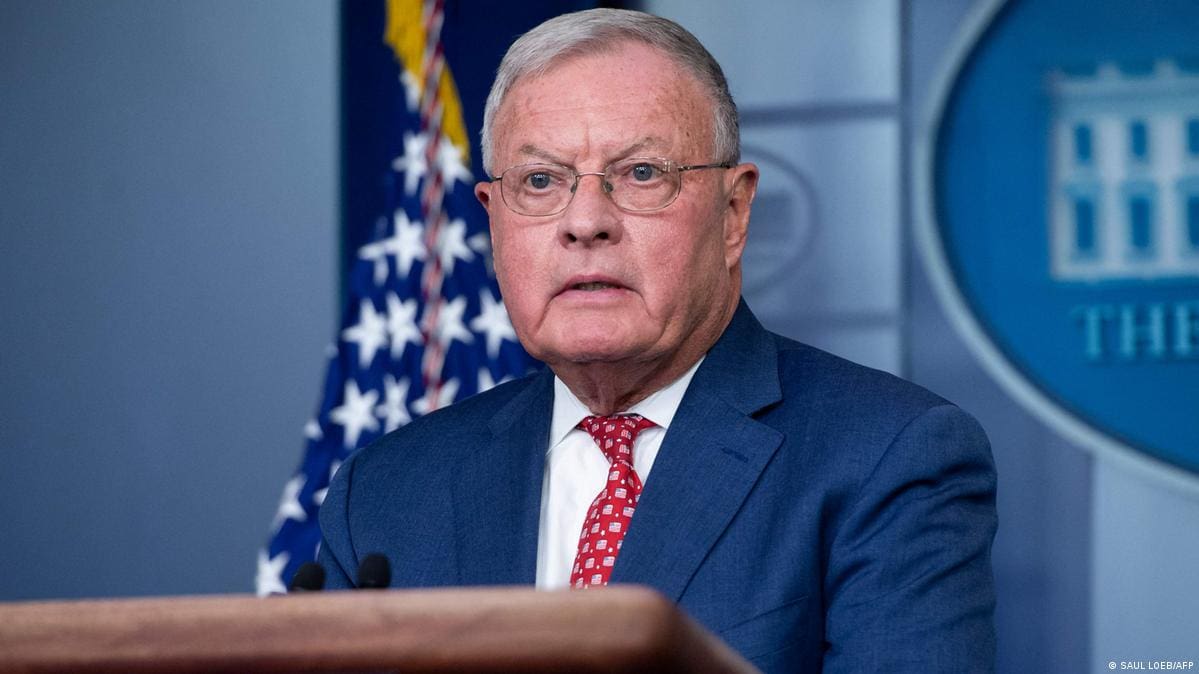
Among such figures is Keith Kellogg, a retired lieutenant general who works among Trump’s foreign policy advisors. He sees Russia’s war against Ukraine as part of a broader confrontation between authoritarianism and the West and emphasizes that the Kremlin is solely responsible for the invasion. Kellogg advocates combining military support for Ukraine with diplomatic pressure on Moscow and maintaining sanctions as a tool of coercion.

Mike Pompeo, the former Secretary of State and Director of the CIA, takes a similar position. He represents the Reagan tradition of Republicans, characterized by US global leadership and toughness toward Russia. Pompeo has repeatedly emphasized that Putin is a dictator, and that Ukraine’s victory is strategically important not only for Europe but also for deterring China and other authoritarian regimes.

There is a group of Republicans in Congress who systematically support Ukraine. Senator Roger Wicker and Congressman Joe Wilson, as co-chairs of the Ukraine Caucus, have consistently stated that Russia is the aggressor and that Ukraine seeks a just peace with reliable security guarantees. They have voted for aid packages, supported sanctions against Moscow, and publicly defended the position that helping Kyiv is in the U.S. national interest.

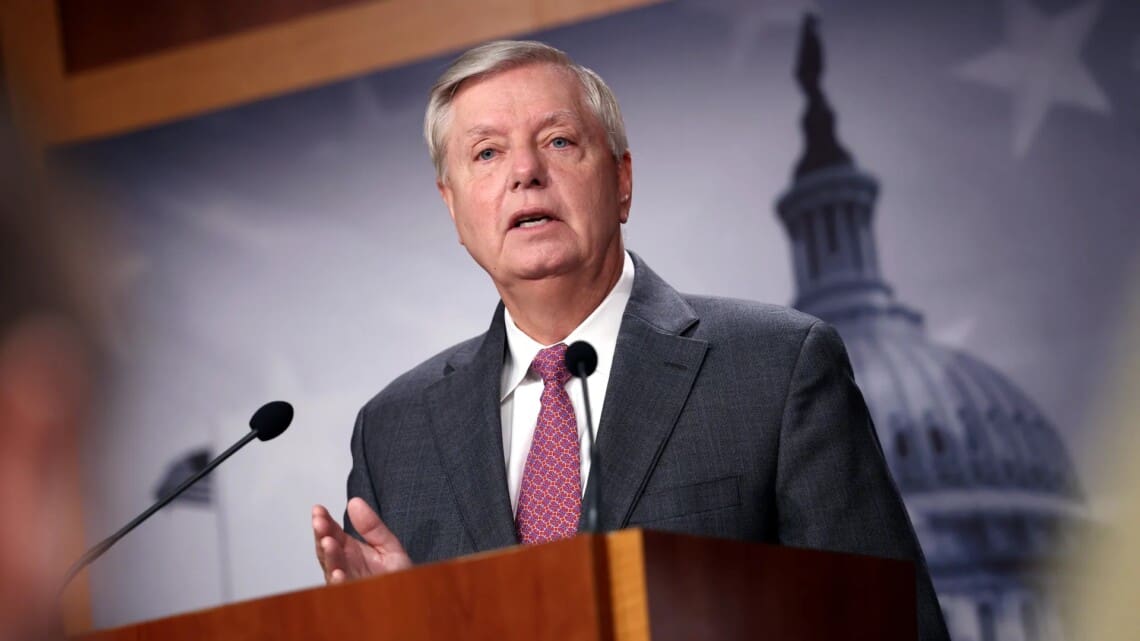
Lindsey Graham and Tom Tillis are also at the forefront of Ukraine’s supporters in the Senate. Graham is a particularly telling figure: on the one hand, he is close to Donald Trump and has a complicated relationship with his own electoral base, and on the other hand, he has spent significant political capital in support of Ukraine. It was he who promoted the idea of cooperation in the field of critical minerals as a way to increase the interest of Trump and the Republicans in a strategic partnership with Kyiv. Despite some critical statements about the Ukrainian government, Graham remains an influential ally, owing his stability to his long career in the Senate and Trump’s support.

Tom Tillis has also consistently supported defense budgets to help Ukraine and advocated for stronger sanctions against Russia.

At the same time, the Republican Party is not monolithic. Different currents coexist within it. The so-called Freedom Republicans continue the tradition of Ronald Reagan, supporting an active foreign policy and the global role of the United States, and therefore are much more likely to side with Ukraine.

The so-called National Republicans, on the other hand, tend to be more nationalistic populist, isolationist, and protectionist, showing more skepticism about international commitments and sometimes sympathizing with politicians like Viktor Orban. The largest group in the House of Representatives, the Republican Study Committee, brings together a variety of positions: some members support assistance to Ukraine, while others express concerns about corruption or Europe’s insufficient contribution.

An important factor is the mood of Republican voters. A poll commissioned by Razom and conducted by Eighteen92 showed that even among skeptics, support for Ukraine could increase by 20 percentage points after additional information is provided. In particular, 71% of respondents said they would be more likely to support Ukraine after learning about Russia’s abduction of thousands of Ukrainian children, and a significant number responded positively to information about the persecution of evangelicals in the occupied territories. In addition, 60% of skeptics are ready to support aid if it strengthens Trump’s position in the negotiations, as it is important for them to see the American leader succeed.

Republican congressmen often pose the pragmatic question of benefits for their districts, especially if they represent rural or economically vulnerable regions. Therefore, arguments about Ukraine’s purchases of American gas, defense orders, drone cooperation, and job creation in the United States can be convincing.

In conclusion, we can state that despite internal contradictions, the Republican Party still has a wing that supports Ukraine and recognizes the strategic importance of our victory. It is worth working with these politicians systematically, adapting messages to different groups: for supporters of traditional conservatism, emphasize deterring Russia and strengthening US global leadership, for nationally oriented Republicans – economic benefits and strengthening Trump’s position, for religiously conservative environment – the protection of believers and abducted children. The most effective way to influence politicians is through their voters. The Republican Party is not a lost cause for Ukraine, and with the right arguments, it can remain an important partner in the struggle for a just peace and long-term security.

December 5, 2025
FacebookTwitterLinkedinWhatsappTelegramViberEmail
Events.

The Conservative Platform has gathered the best scholars to launch a systematic work on debunking Russian myths

від Холіна Марія December 1, 2025

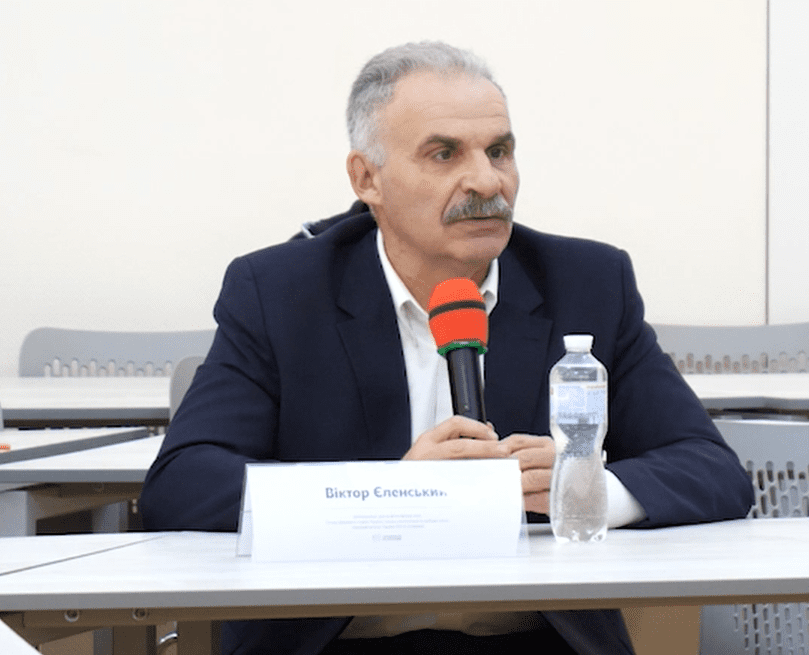
On November 27, the Red Building of the Taras Shevchenko National University of Kyiv hosted a roundtable discussion on “Christian morality and traditionalism among Ukrainians and Russians – what exactly is the difference between the two peoples?” The event was organized by the Conservative Platform (a project of the NGO “Foundation for Promoting Democracy“) with the support of the Hanns Seidel Foundation in Ukraine.

The discussion was not only about cultural or religious differences. The event brought together leading Ukrainian scholars, religious scholars and public figures to discuss the role of conservatism in the politics of Russia and Ukraine. Special attention was paid to how Russia uses “traditional values” as a tool of hybrid warfare.

Moderator: Yaroslava Bozhko, Head of the Center for Political Studies “Doktryna“. He noted that Russia has long turned the rhetoric of “traditional values” into a political tool – a way to legitimize the war, control its own population, and influence Western audiences. According to him, this is a “screen” that hides a pragmatic and authoritarian policy that has nothing to do with the declared moral principles.

This rhetoric is nothing more than a convenient mask to justify aggression and repression, which have nothing to do with Christian ethics.

“In fact, Russia is actively exploiting right-wing conservative and Christian traditionalist rhetoric, passing it off as a certain ideological screen. However, this ideology is nothing more than a cover, as their cynical and pragmatic policies do not correspond to the declared conservative values in the slightest” – Bozhko.

Victor Yelensky: How religion works in diplomacy and why “Holy Rus” is a myth

Religious scholar, Doctor of Philosophy and head of the State Service for Ethnic Policy and Freedom of Conscience Viktor Yelenskyy spoke about how Ukrainian religious communities are involved in international support for Ukraine. In particular, during 2023-2024, evangelical Protestants – Baptists and Pentecostals – repeatedly traveled to the United States, participated in forums on religious freedom, and met with congressmen. According to him, these trips really helped to change the tone of the conversation about Ukraine among American conservatives and influenced decisions on aid.

“Our Ukrainian Protestants – Baptists and Pentecostals – have made a series of regular visits to the United States to convince the American community and conservative circles that Ukraine is “Europe’s biblical belt”. We had to demonstrate to the world that active religious communities not only existed, but also stood in the breach for the country during the war, confirming their deep patriotic commitment.”

At the same time, he added, Russia is conducting an active information campaign to present Ukraine as a country that “persecutes Christians.” It is promoted by American lawyer Robert Amsterdam, a man who works in the interests of Novinsky. In an interview on Tucker Carlson’s show, he accuses the Ukrainian authorities of “religious pressure.”

Yelenskyy explained that the new Ukrainian law does not force churches to change their calendar, language, or autocephalous status. It only requires a clear position: to recognize that the church is no longer subordinate to Moscow and to certify its withdrawal from the Russian Orthodox Church, especially in the context of the occupied territories.

He also drew attention to the Ukrainian example of religious equality. In the All-Ukrainian Council of Churches, the voice of the smallest Lutheran community weighs as much as that of the largest Orthodox community. And in Ukrainian politics, representatives of different denominations coexist peacefully: “We had an Orthodox president, a Jewish prime minister, a Greek Catholic speaker of parliament, and a Baptist secretary of the National Security and Defense Council.”

Speaking about Russian ideological myths, Yelensky recalled the real numbers:

“When we talk to a Western audience, it is most productive to turn to world rankings to show what this ‘Holy Rus’ really is. And it will turn out that it leads Europe in terms of social catastrophe: the number of premeditated murders per 100,000 people. Moreover, Russia is a champion in drunken suicides and one of the world’s winners in the number of abandoned children. These shocking facts completely destroy the image of a “bastion of conservatism” created by Moscow.

In terms of religiosity, there are no illusions either: Russia is consistently among the least involved countries in Europe, along with East Germany and Estonia. All this, according to Yelensky, is important to convey to Western audiences through facts, not slogans.

Serhiy Kvit: Russia is not conservatism, but a myth covering imperialism

Serhiy Kvit, President of the National University of Kyiv-Mohyla Academy, called for careful use of terms such as “conservatism” or “nationalism” when referring to Russia. In his opinion, these concepts have a deep cultural context and cannot be applied to Russian political reality without distorting the meaning.

“To avoid falling into such self-deception, we need to understand that conservatism in the British or American sense has absolutely nothing to do with how Russia is trying to position itself. We need to see that Russia is essentially imperialism and chauvinismand their talk of traditional values is just a mythologythat glues them together and does not reflect a real political culture”

He explained that the Russian Federation is simultaneously trying to be attractive to both the left and the right: on the one hand, as a critic of capitalism and Western liberalism, and on the other, as an alleged defender of traditional values. In fact, according to Kvit, this is a typical imperial project that should be called by its proper names: chauvinism, imperialism, fascism (in the sense of nationalism of a state that seeks to dominate others).

He also pointed out that there is no structured political culture in Russia – only a “scorched field” without connections between people, where everything is based on fear, control and pressure. What unites this space, according to Kvit, is mythology.

“However, despite their internal disintegration and chauvinism, they have something that unites them. This is the key thing – mythology, namely the Myth of the Holy Russia“, so-called, and so on. In order to find political formulations to describe their culture, we need to look at their myths in essence, because that is the only thing that holds them together.” He summarized.

Yuriy Pidlisnyi: Traditionality is not about words, but about numbers

Yuriy Pidlisnyi, PhD, lecturer at the Ukrainian Catholic University, called for not exaggerating the traditional nature of Ukrainian society based on rhetoric or self-image alone.

“When 80% of the population calls themselves believers, but the divorce rate is 58%, something doesn’t add up,” he said.

In his opinion, conservatism in Ukraine is not a reality, but rather a task that has yet to be accomplished. Public opinion may be pious, churches may be active, but indicators of family life, birth rates, and the duration of marriages show otherwise.

Mr. Pidlisny also pointed out that many Western (especially right-wing) conservatives, particularly in France, perceive Russia as the “last bastion of tradition.” This myth, he said, is deeply rooted, and that is why it needs to be refuted not just with words, but with facts.

“When we look at the statistics in Russia to refute their myths about conservatism, we see that the situation with divorce rates, abortions, domestic violence is significantly higher than in Ukraine. How can they talk about fighting against ” by the demonized West“, when “we will see more satanism in Russia“? A country that has significantly greater problems with these moral indicators cannot justify its war by claiming that it is going to save the world from sin.”

The rhetoric about “Holy Russia” fighting the “satanism of the West” sounds nice, but it has no moral basis, Pidlisnyi believes. If we are talking about real values, we need to see how they are embodied in life, not on flags.

Alexander Saltovsky: Kyiv is not a branch of Moscow, but an alternative to the “Third Rome”

Doctor of Political Science and professor at the Kyiv National University Oleksandr Saltovsky made a historical excursion to show that the connection between Ukrainian Orthodoxy and Moscow is not a tradition, but rather a political obsession.

He recalled that for centuries the Ukrainian Orthodox Church had opposed the union with the Moscow state, and the struggle for autonomy continued until the eighteenth century. That is why, according to Saltovsky, the claim of a “common spiritual identity” is more of an imperial myth than a historical fact.

He also criticized the idea of a “symphony” between church and state in Russia, which is supposedly organic to Orthodoxy. In Moscow’s version, Saltovsky says, it has always been a one-sided game: the state controlled the church, used it, and often brutally suppressed it.

“Ukrainian Orthodoxy has always treated Moscow with great caution because of this problem of symphony. In the Moscow kingdom, the state did not know true partnership with the church; it was ready to destroy it institutionally. As Kostomarov noted, if the church tried to oppose the state, “it dealt it fatal blows.” Therefore, it can be stated that “In Moscow, the state not only coexisted with the church, it actually dealt it fatal blows,” which led to the church being headed by a secular prosecutor, not a spiritual leader.” He noted.

In contrast, Saltovsky proposed to turn to the Ukrainian spiritual tradition centered in Kyiv, which has long maintained autonomy, openness to the West, and internal pluralism. He recalled the concept of “Kyiv as the Second Jerusalem,” which has deep roots in the Orthodox world and can serve as an alternative to the myth of Moscow as the “Third Rome.”

“It’s high time we abandoned the role of reacting and constantly denying Russian myths and narratives. Our strategy should be proactive: we have our own, no less profound spiritual and cultural tradition. Instead of denying it, we should offer this tradition to the world as a positive response and show that it is a solid foundation of our identity and European future.” – Saltovsky.

Vladislav Gavrilov: ROC is not just an observer, but a participant in crimes

Historian Vladyslav Havrylov drew attention to the direct involvement of the Russian Orthodox Church in crimes against Ukrainian civilians. Contrary to the widespread perception of the church as a bystander to the war, he said, the ROC plays an active role in systemic aggression.

He gave examples: The ROC is involved in the mass deportations of Ukrainian children, acts as a tool to legitimize this process, and supports Russia’s policy of cleansing the religious field in the occupied territories.

“We need to convey to the West a clear understanding that the ROC is not just a spiritual structure. It is a key element of the Russian regime, which directly performs the function of ideological support for crimes. It is responsible for supporting the aggression, justifying the war, and its actions, such as mass deportations of Ukrainian children and establishing a monopoly in the occupied territories, confirm that it is an ideological continuation of the criminal regime,” Gavrilov said.

It is not just about cooperation, but about establishing a monopoly. Only the Russian Orthodox Church is allowed to operate in the Russian-controlled regions, while others are banned, often accused of “terrorism” or “extremism.” According to Gavrilov, this rhetoric is very similar to the Bolshevik model of fighting “counterrevolution.”

This example, in his opinion, illustrates well that “traditionalism” in the Russian context is a tool of control, not a value.

Andriy Rudyk: Russian “Christianity” in Africa is a cover for crimes

Political scientist and military officer Andriy Rudyk described how Russia uses religion as a tool of influence on the Global South, particularly in Africa. According to him, the rhetoric of “traditional values” is no less active there than in Europe, and often has non-spiritual consequences.

He cited the example of the Central African Republic, where Russia supports a local Baptist leader using religious channels as part of a geopolitical game. At the same time, according to Rudyk, the Russian presence in the region is primarily mercenaries and private military companies that have nothing to do with Christian values.

“When we talk about the crimes committed by Russian mercenaries in Africa, for example, in Mali, we see that Russian ‘Christians’ are the ones who behead, rape and cut out organs. They kill both Muslims and Christians indiscriminately. How can they speak of themselves as defenders of Christianity when their actions are criminal, including organizing organ transplants? This information must be brought to the world, because it is not broadcast to Europe or the African continent.”

Rudyk emphasized that this information practically does not reach the media, while Russia continues to promote itself as a “civilizational alternative” even where its influence is accompanied by war crimes.

In his opinion, Ukraine should not just deny Russian narratives, but show the facts, especially in communication with the countries of the Global South, and do so loudly, systematically, and proactively.

Olena Semenyaka: To resist Russia, we must study it

Olena Semenyaka, a philosopher, youth studies scholar, andIntermariumAmbassador, emphasized that in order to win the war against Russia, one must have a deep understanding of its ideology. And it’s not just about modern propaganda, but about the entire cultural and philosophical heritage that has shaped Russia’s view of itself and the world.

She mentioned the legacy of Slavophiles, Westerners, and Eurasians, as well as the influential ideas of figures such as Fyodor Dostoevsky. Despite his popularity, Dostoyevsky himself admitted in his Writer’s Diaries that Russian messianism often turns into nihilism, i.e., the rejection of everything alien and “other” under the guise of spiritual superiority.

Semenyaka also mentioned Spengler‘s philosophical concept of “pseudomorphosis,” when a national culture takes on foreign forms without truly assimilating them. According to her, the contemporary Russian thinker Alexander Dugin himself describes Russian identity as “archaomodern ” – a strange combination of archaic, aggression, and modern technology.

“It is chaos made of wreckage, and it is this chaos that is fighting against Ukraine today. And not only with tanks, but also with meanings,” she emphasized.

Semenyaka called for not just refuting Russian ideas, but offering her own, deep counterpoint, capable of speaking to the West on equal terms-not just in terms of anti-liberalism or resistance.

“We cannot remain in a position where we are only reacting and constantly denying Russian myths and narratives. We need to go beyond just being ‘against something’. Instead, we need to become proactive and “be the bearers of a constructive alternative” that should manifest itself on the intellectual, cultural and political levels. This means that Ukraine should actively offer the world its own, deep worldview concept, which includes the “planetary dimension” and “spiritual cultural categories”

Ruslan Khalikov: Russian ideology is a hybrid product for export

Ruslan Khalikov, a religious scholar, military officer, and publisher, continued his criticism of Russian conservatism as a propaganda export that has no real basis in Russian society itself. According to him, Russian ideology is not a system of values, but a flexible set of stories for different audiences.

“I would like to support the idea that Russian ideology is exportable. It does not derive from the values prevalent in Russian society, because it is not obliged to do so. Ideology is always an instrumental thing, and it is designed for export. Moscow offers completely different stories to different recipients: “For American Protestants, they offer that they are conservatives. For African post-colonial states, for example, they suggest that they are decolonizers.” This shows that the Russian authorities are acting pragmatically, using ideology as a weapon to influence the West and the South.”

Khalikov suggested exploiting contradictions within the Russian ideological scene itself, including conflicts between “guardians” (orthodox stateists) and traditionalists who rely on more mystical ideas like Ganon. These differences, he believes, can be effectively highlighted in counterpropaganda to show the insincerity and fragmentation of Russian messages.

At the same time, he criticized the excessive fascination with figures such as divorce rates, which are sometimes presented as evidence of the decline of tradition. Khalikov reminded that millions of Ukrainians are now abroad, and a significant number of men are at the front, so these figures cannot fully reflect the state of society.

“Yes, the statistics have increased, but the reason is not a change in values, but the war. Ukrainian society remains quite conservative – it’s just not always visible on the surface,” he said.

Yuri Kiselyov: Russia is a pseudo-morphosis that has stolen its name, language and faith

Doctor of Geography and Professor Yuri Kiselev presented his analysis of Russia as an example of civilizational pseudomorphism, i.e. a culture that adopts foreign forms without assimilating them in essence. He identified three dimensions of this distortion.

The first is historical. According to Kiselyov, Peter the Great deliberately stole the name “Rus” when he began calling his state the “All-Russian Empire.” It was the theft of a Greco-Latin name that historically belonged to Kievan Rus. Thus, the new empire gained external legitimacy that did not correspond to its ethno-cultural core.

The second is linguistic. Russians are ethnogenetically of Finno-Ugric and Turkic-Mongolian origin, but at the same time they adopted Old Bulgarian (Church Slavonic) as the basis of their “national” language and culture. This created a linguistic artificiality that looked Slavic but did not correspond to the actual cultural origin.

The third is religious. Kiselyov emphasized that what is called Orthodoxy in Russia has nothing to do with the Christian essence, as the ROC blesses weapons, violence and war by supporting aggression against Ukraine.

“What is called Orthodoxy in Russia, and religion in general, is not really that. The Christianity that blesses missiles and prisons is not Christianity, but only a political system with a religious wrapper. We see them blessing the instruments of mass murder of civilians in Ukraine, which is not at all in line with the essence of the Christian religion. This is devilish Orthodoxy in quotation marks, with which neither dialog, nor understanding, nor compromise is possible,” he said.

According to Kiselyov, pseudo-morphosis is the key to understanding the Russian model of the state, which seems to resemble European or Orthodox states but functions on completely different principles.

Mikhail Boychenko: Russian “conservatism” is a simulacrum and a weapon

Philosopher and professor of the Kyiv National University Mykhailo Boychenko called Russian conservatism a simulacrum, that is, an imitation that has no real content. According to him, Russia is substituting concepts: it presents realpolitik – the game of interests and power – as a moral doctrine, although it is simply political cynicism wrapped in “traditional values.”

He also touched on the religious dimension, tracing how Orthodoxy was artificially imposed in northern Russia during the Horde as a religion convenient for control. In this context, he spoke of “negative cultural selection” -when the most cruel, cynical, and convenient for the system remained in power for centuries. This, in his opinion, formed a specific Russian political psyche, different from the Western or Ukrainian ones.

“Russia did not just break away from the Orthodox world, it ‘hacked’ it,” Boychenko said.

According to him, this is not Christianity, but an instrument of intimidation and control that only outwardly resembles religion. That is why, he believes, any attempts to negotiate, seek compromise, or engage in dialogue are an illusion, because we are not dealing with an ideology, but with an anti-value system where even faith is used as a means of pressure.

“This is not just a simulacrum of conservatism – it is diabolical orthodoxy. It cannot be reformed or rethought. It has to be defeated,” he concluded.

Maksym Koliba: Ukrainian conservatism is alive and capable of change

Maksym Koliba, deputy dean of UCU, suggested looking at Ukrainian conservatism as selective, that is, one that can change slowly but consistently. He emphasized that Ukraine is not just the periphery of Europe, but its eastern part with a unique political and religious experience.

“We are neither West nor East. We are the eastern part of Western civilization,” Koliba said.

In his opinion, Ukraine has historically avoided the extremes of both Eastern Caesaropapism and Western centralization, and instead developed its own political culture with elements of elected leadership, responsibility, and freedom-lovingness. He cited the traditions of Rus’ and Cossack democracy, where leaders were elected but could also be overthrown if they betrayed trust.

“In Ukraine, Maidan is not an exception, but a mechanism. When something goes wrong, it starts up again,” he said.

Koliba also emphasized that religious tolerance is one of the key Ukrainian values, which is manifested both in political life and in interfaith dialogue. According to him, this feature should become a part of Ukraine’s external communication, especially in conversations with countries where religion still plays a large role in public life.

Yuriy Oliynyk: Russia is a mirror that distorts other people’s ideas

Political scientist and military officer Yuriy Oliynyk pointed out that the Russian model of full state control over the church is not really a legacy of Byzantium, but a Western borrowing. According to him, Peter the Great took as a model the synodal structures of Protestant countries, in particular Holland and England.

“This is not an ‘Orthodox tradition,’ as they present it, but a copy of Western practices, only brought to the point of absurdity,” Oliynyk said.

He characterized Russia as a “mirror” that borrows ideas from the West but transforms them to suit its own needs. The main goal of this transformation is not faith or ideology, but the preservation of the state machine and imperial expansion. That is why even religious narratives there are only an instrument of political play.

Oliynyk also warned against Ukraine’s own ideological extremes – the temptation to automatically reject any conservative thesis just because it is being promoted by Russia. He emphasized that many of Russia’s “traditional” messages are distorted versions of other people’s ideas, and that we should have a balanced discussion without being accused of “collusion with Moscow” for trying to talk about difficult things, such as abortion, faith, or morality in public space.

“Russia is broadcasting other people’s ideas through its distorted glass, so our task is not to copy, but to comprehend. And not to silence what is important just because the enemy is also talking about it,” he said.

Iryna Fenno: How Russia covers up its aggression with the “Orthodox” narrative

Iryna Fenno, Associate Professor of the Department of Religious Studies at the Kyiv National University, focused on exposing the use of Christian rhetoric in Russian propaganda. According to her, it is through a distorted interpretation of morality and faith that Russia is trying to legitimize the war, both on its own territory and abroad.

“Showing how Russia presents ‘Orthodoxy’ is a very effective tool,” the researcher emphasized.

Fenno spoke about the systematic work on documenting the destruction of religious buildings, which she is conducting together with religious scholar Ruslan Khalikov. It is about analyzing whether these attacks were intentional and how the occupiers turn religious sites into military targets.

Another topic of the speech was the ideologization of nuclear weapons. Iryna Fenno cited the example of public statements by Russian strategist Sergei Karaganov, who calls nuclear weapons a “gift from God” and its use a “moral duty of Russia.”

“It would be a sin not to use it,” is how Karaganov justifies a possible nuclear strike, supporting his theses with religious rhetoric. This is distortion of Christian ethicsand its exposure is an effective tool for countering it.”

Fenno also drew attention to the expansion of Russian propaganda. If earlier it was about “denazification of Ukraine,” now, according to data from the Russian World forums under the patronage of Patriarch Kirill, the focus is on “nazification of Europe.” In 2025, one of the forums was held under the slogan “Russian World Against Nazism,” which indicates an attempt to expand the zone of information warfare to a Western audience.

In this context, she emphasized the importance of properly conveying the Ukrainian message to the West. Especially to environments that value pacifism, interfaith respect, and the Christian understanding of non-violence. The task is to show how Russian ideology abuses these concepts and why true humanism is on the side of Ukraine.

Yuriy Zavgorodnyi: “Holy Rus,” Evil Genius, and the Challenges of the Technological Age

In his speech, philosopher and orientalist Yuriy Zavhorodnyi combined a historical analysis of religious identities with reflections on the nature of the Russian threat and new challenges for conservative thought in the twenty-first century.

Starting with the concepts of “Holy Rus” and “Kyiv as the Second Jerusalem,” the researcher noted that these ideas have deep roots in the Ukrainian tradition, but today they are on the periphery of discussions. Meanwhile, Russia is actively using the concept of “Holy Rus” as a propaganda tool. According to Zavhorodnyi, Ukraine is losing in this symbolic field, although it could rethink and actualize these concepts in its own way.

“These are very capacious, creative, and viable concepts. But now they are not in the spotlight, and this is a problem,” he said.

Zavhorodnyi focused on the nature of the Russian threat. He urged not to underestimate its complexity and scale, because Russia, he said, is not a temporary distortion, but a phenomenon that has been forming for more than half a thousand years. He characterized it metaphorically as an “evil genius” -strong, influential, but destructive.

“He is a genius, but he is evil, and this is the essence of the danger,” the expert explained.

In the context of new threats, Zavhorodnyi drew attention to the role of technology, which is changing the very essence of political and ideological divisions. According to him, modern traditionalism cannot ignore the challenges of nuclear weapons, digital control, or artificial intelligence.

“We may already be using dangerous tools without even fully realizing it,” he said.

The researcher supported the idea of creating working groups so that the discussion does not disappear without a trace but yields practical results. According to him, structured work on such topics should continue, in particular in an interdisciplinary format.

Structured work is the next step after the round table

The extended roundtable resulted in a decision to move from discussion to structured work. The participants agreed that the format of brainstorming, while productive for starting a discussion, was not sufficient for the practical implementation of ideas.

The goal of further work is to create applied tools for external communication: in particular, illustrative materials and indicators that will allow to clearly and reasonably refute the image of Russia as a “conservative” state, especially in communication with Western audiences.

Four areas of structured work

To summarize the discussion, four thematic areas within which the working groups could operate were outlined:

1. Ideological block:
Analysis of the state ideology of the Russian Federation, which does not reflect social realities and is created for export. It includes a study of the conflict and artificiality of the main ideological lines of Russian propaganda.

2. Social Indicators:
The use of statistics to demonstrate Russia’s inconsistency with declared “traditional” values. The focus is on data on divorce, murder, alcoholism, and violence.

3. Historical Perspective:
A study of the differences between Ukrainian and Russian political philosophy, with an emphasis on the interpretation of conservatism, religion, and national identity.

4. Religious Dimension:
A study of how Russia uses Christian rhetoric to justify aggression, including documentation of destroyed religious buildings and analysis of the ROC’s rhetoric.

December 1, 2025
FacebookTwitterLinkedinWhatsappTelegramViberEmail
Analytics

Who are the “paleocons” and what do they want?

від Майданюк Валерій November 29, 2025

Conservatism has many varieties, and one of its trends in the United States is the so-called paleoconservatism, which is critical of the modern form of liberal democracy and seeks isolationism. Because of its commitment to older and non-mainstream models of social organization, some even propose to consider a mammoth as a symbol of paleoconservatism, whose image fits well with the characteristics of this ideological trend .

American paleoconservatives are critical of the current model of democracy and call for a return to moral principles based on religion. US paleoconservatives are characterized by American nationalism, Protestant Christian ethics, and isolationism in geopolitics.

Paleocons are particularly critical of the centralization of power, drawing attention to the constant growth of government functions in recent decades. Paleoconservatism fights against immigration, liberal values, and seeks to protect American producers with high tariffs and protectionism. In relation to liberal narratives about gender, race, etc., paleocons propose a return to the values of traditional conservatism of the last century.

It is believed that the term “paleoconservatism” was first used by the political philosopher Paul Gottfried, trying to identify a political movement whose supporters supported the traditions of South America and acted as an opposition to classical conservatives. During the Vietnam War, the paleocons opposed US intervention in Indochinese affairs, in contrast to the Republican Party, a classical conservative force that defended the strong international position of the United States.

Paleoconservatives place great emphasis on broad autonomous rights of states, protecting local values, Famous paleoconservatives argued that desegregation, broad social welfare programs, tolerance of gay rights, and separation of church and state harmed local communities and that these problems were imposed by federal legislation.

Paleoconservatives are generally critical of Israel in the Israeli-Palestinian conflict and believe that supporting Israel harms relations with the Islamic world and American interests abroad. During the war between Israel and Hamas, paleoconservative and controversial journalist Tucker Carlson claimed that Israel was guilty of war crimes. It is worth reminding that Carlson also interviewed Putin, but the Russian dictator disgraced himself with frankly absurd statements that made the audience laugh.

On the other hand, the rise of paleoconservatism was a reaction of the American “heartland” to the problems associated with US international policy, the flow of immigrants and the multiculturalization of American society. Paleocons are often called a radical movement for their isolationism, closing borders to refugees, and active discussion of racial issues.

At the same time, for Ukraine and global support for democracy, American isolationism is a dangerous trend that could lead to the leveling of the United States’ global influence.

Among the well-known speakers of paleoconservatism is the author of the famous book “The Clash of Civilizations” Samuel Huntington, who wrote that multiracial, multiethnic states are inherently unstable. The Chronicles and The American Conservative magazines are generally considered paleoconservative.

Donald Trump is not considered a paleocon, but there is a certain influence of paleoconservatism on his views. And some political scientists consider Trumpism to be related to paleoconservatism.

At the same time, supporters of the paleoconservative field do not form their own party, but prefer to represent their interests within the groups of the Republican Party and other organizations in the United States.

Obviously, in the next four years, conservatism with its various strands will play a greater role in world politics, and Ukraine should take this into account.

Author: Valeriy Maydanyuk

November 29, 2025
FacebookTwitterLinkedinWhatsappTelegramViberEmail
Analytics

Vasyl Kuchabsky: a conservative who led the Communists by the nose

від Майданюк Валерій November 28, 2025

One of the three key figures of Ukrainian conservatism was Vasyl Kuchabsky, a political and military figure who fought for Ukrainian independence in word and deed, laid the scientific and theoretical foundations of the statehood idea, and led the communist secret services by the nose for decades.

Already in his student years, the young Kuchabsky moved on to the practical dimension of the struggle for the Ukrainian idea: in 1913 he co-organized the secret paramilitary organization Mazepa’s Military Course. Its members attended lectures on military affairs, organized field exercises and firing, and procured weapons. Kuchabsky himself wrote several manuals on military affairs. So the First World War did not take the organization by surprise. Kuchabsky gathered a hundred volunteers and joined the Legion of Ukrainian Sich Riflemen, where he soon became the commander of a hundred.

In the battles with the Russian army, Kuchabsky was taken prisoner, but in the chaos of the revolutionary events of 1918, Kuchabsky managed to escape and arrive in Kyiv, where the Ukrainian People’s Republic was proclaimed. Knowledgeable in military affairs, Kuchabsky joined the Galician-Bukovyna Sich Riflemen and fought street battles against Muravyov’s Bolshevik troops. In 1919, Kuchabsky was sent to Sweden as part of the UPR diplomatic mission. But he soon returned to the front, this time of the Polish-Ukrainian war. After the defeat of the ZUNR and his captivity, Kuchabsky actively developed an organized underground, participated in the creation of the Ukrainian Military Organization, was persecuted by the Polish authorities, and after the transfer of Galicia to Polish rule in 1923, emigrated to Germany.

There, Kuchabsky married his longtime associate Anna Zaluzhna, who was also arrested after an assassination attempt on dictator Pilsudski. After starting a family, Vasyl Kuchabsky taught at a German university in Kiel. Many representatives of the Ukrainian emigration taught at universities in Europe, but most worked at Ukrainian universities in European countries. Kuchabsky, on the other hand, was fluent in German and had published substantial scientific works while studying at the University of Berlin. During this period, the central theme of Kuchabsky’s writings was the analysis of the events of the liberation struggle and the reasoning behind its defeat.

Kuchabsky stated that “the founding of a state is not a matter of revolution, but rather of counterrevolution,” that is, the forces that are released during a revolution but work to preserve its achievements and strengthen the newly emerging institutions. And as a true conservative, he emphasized the role of elites in the success of the state project. At the same time, at the beginning of the twentieth century, Kuchabski already called for the formation of a common conservative front of neighboring nations “against everything that leads those nations into chaos.” Developing the theme of Polish-Ukrainian reconciliation, Kuchabski pointed to the common threat of Russian Bolshevism to both peoples.

During the Second World War, the historical traces of the prominent Ukrainian conservative Vasyl Kuchabsky were cut off in Lublin, where he worked as a library director. It was believed that he was killed either by the Soviet services or the Polish Home Army. It was only in 2007 that it was discovered that at the end of World War II, Vasyl Kuchabsky actually moved with his family to Germany. But since the town of Blankenburg, where he settled, fell into the Soviet occupation zone, Kuchabsky, realizing his status as a fighter for the freedom of Ukraine before the Soviet authorities, went into hiding.

At a time when the Berlin Wall was being built and the Stasi was looking for suspicious and unreliable people, UPR and UVO activist Vasyl Kuchabsky lived in East Germany under the guise of a native German citizen, worked in the municipality of Blankenburg, and then taught at a local school. And for a quarter of a century, no one guessed that he was actually a Ukrainian who fought against the Bolsheviks with his own hands.

Until his death in 1971, Kuchabsky lived in hiding in the GDR, having been forced to cut off all contact with the Ukrainian emigration. Many professional spies would not have been able to accomplish this task. It was only after the fall of communism that Detlef Kuchabsky’s grandson learned about his Ukrainian roots when he began to research his own family tree.

Ukrainian conservatism has become one of the most scientifically grounded political theories in the twentieth century, not least because of such prominent figures as Vasyl Kuchabsky.

Author: Valeriy Maydanyuk

November 28, 2025
FacebookTwitterLinkedinWhatsappTelegramViberEmail
History

Andrei Sheptytsky – a spiritual leader who combined tradition and modernity

від Майданюк Валерій November 27, 2025

The name of Metropolitan Andrey Sheptytsky has long been a symbol of spiritual greatness and moral fortitude. He lived at a time when the Ukrainian people were struggling for their place among other European nations, and often stood on the brink of survival. In this struggle, Sheptytsky acted not only as the head of the Ukrainian Greek Catholic Church, but also as a moral authority who led the people along the path of tradition and at the same time prepared them for the challenges of the modern world. His views can be called conservative, but it was a special, “living” conservatism-open to change, but rooted in eternal values.

Conservatism without stagnation

For Sheptytsky, conservatism did not mean freezing society or fear of the new. On the contrary, he saw tradition as a source of strength that allows a nation to develop without destroying its own identity. In his pastoral letters, the Metropolitan repeatedly emphasized that spiritual and moral principles are the foundation without which any social or political projects are doomed to failure.

He opposed revolutionary upheavals and extremes, calling for gradual and cautious transformation. It was this approach that allowed him to simultaneously remain faithful to tradition and closely monitor the development of the world around him.

Faith as the core of the nation

Sheptytsky was convinced that there is no nation without faith. In difficult times – under the rule of Austria-Hungary, Poland, and later Soviet totalitarianism – he reminded Ukrainians that religion is a source of strength and support. For him, Christian morality was not a private matter for everyone, but a common guide for society.

At the same time, Sheptytsky realized that the church could not be confined to the walls of the church. It should take an active part in the life of the community, support education, culture, and the economy. That is why he supported schooling, the development of cooperatives, and helped Ukrainian artists and scientists. His conservatism was closely linked to his desire to build a strong, morally hardened nation.

Against extremes: between capitalism and communism

The Metropolitan was critical of both capitalism and communism. In the former, he saw the threat of turning a person into a “cog in the market,” and in the latter, the destruction of freedom and spirituality. Sheptytsky called for a “golden mean”-a social system built on the principles of Christian solidarity and mutual support.

He believed that the economy should serve people, not the other way around. This position sounds surprisingly modern, especially in an era when society is once again looking for a balance between the market and social justice.

Spiritual leader of the nation

Despite his conservative beliefs, Sheptytsky was open to dialogue. He tried to build bridges between Ukrainians and Poles, between Christians of different denominations, and even between believers and nonbelievers. This distinguished him from many religious figures of the time.

His voice sounded especially strong during the darkest years of World War II.

Sheptytsky was not afraid to speak out against the crimes of Nazism and defend the persecuted, risking his own life. This was also a manifestation of his “conservatism” – loyalty to eternal moral principles even when it was dangerous.

A legacy for modern Ukraine

Andrei Sheptytsky left behind a legacy that is still surprisingly relevant today. His teachings remind us that reforms without morality are meaningless, and progress without a spiritual foundation can turn into a disaster. He showed that conservatism can be not a brake, but a stable support for a nation that seeks development.

At a time when the world is experiencing another crisis of values, Sheptytsky’s words and example sound like a call to hold on to your roots, but not be afraid to grow and renew.

November 27, 2025
FacebookTwitterLinkedinWhatsappTelegramViberEmail
Новіші
Старіші

ВАЖЛИВЕ

Who forms the “hawkish” wing of the US...

January 22, 2026

Stepan Tomashivsky is a conservative who warned of...

December 28, 2025

A Pole who believed in Ukraine earlier than...

December 26, 2025

Being yourself and not pretending: how conservatism is...

December 10, 2025

MAGA as a new ideology of American conservatism

December 7, 2025

UKRAINIAN EXPERTS TALKS’S PODCAST

Новини

  • The Conservative Platform has gathered the best scholars to launch a systematic work on debunking Russian myths

    December 1, 2025
  • Budanov has a sober view of geopolitics and leads an effective team – blogger

    July 3, 2025
  • CDU/CSU leader pays support visit to Kyiv

    December 9, 2024
  • With the help of Russia, the Taliban wants to build an air defense of Afghanistan

    September 11, 2024
  • Americans to deploy Typhon missiles capable of reaching Russia on Japanese islands – media

    September 10, 2024
Назад Вперед

Спротив.News

«
Prev
1
/
213
Next
»
loading
play
Мінуснули три мости за раз! Сили оборони ламають логістику окупантів на ТОТ!
play
Крим переходить у режим ізоляції? Окупанти скасовують масові заходи до 1 вересня!
play
«Гордість, Єдність, Мрія»? Як РФ перетворює День молоді на ТОТ на шоу пропаганди
«
Prev
1
/
213
Next
»
loading

Реалізується ГО Фонд сприяння демократії за підтримки Фонду Ганнса Зайделя в Україні

Copyright © 2017 Фонд сприяння демократії Наші Політика конфіденційності,  Умови використання сайту
Facebook Youtube Telegram Spotify Instagram Linkedin
Консервативна Платформа
  • News
    • Analytics
    • Worldview
    • Anti-imperial front
    • Weapons
    • Geopolitics
  • publication
  • Position.
  • Events.

Shopping Cart

Close

No products in the cart.

Close
  • Українська (Ukrainian)
  • English